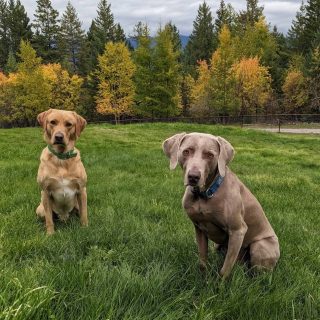
Training your dog at all is more important than what kind of obedience training you and your dog actually do. Think about all the dogs you know. How many of them are actually trained well? How many have had any training at all? That alone should motivate you to train your dog better.
When it comes to training your dog, you basically have four options. You can train the dog yourself, take her to a group class, meet one on one with a trainer or send her somewhere to have someone else train her for you.
If you choose to train your dog yourself, the hardest part will be to stay disciplined enough to work with her every day. But if you have experience with dog training, this might be the way to go. You can work on your own schedule and pace and use your own training methods. You’ll save money on hiring a trainer, too. There are hundreds of books you can read on training your dog. I recommend “Katz on Dogs,” by Jon Katz.
If you’d like help training your dog, ask your dog’s vet if he or she recommends a trainer in your area. I take my dogs to formal obedience classes, mostly because I really enjoy working around a group of dogs and people. The dogs really enjoy it, too. Most of these classes are offered in sessions several times a year and meet once a week for six to eight weeks. In this format, one or two instructors will work with the group on heeling and basic obedience. This atmosphere is a great way for the dogs to learn to listen to their owners, even with so many distractions. Most trainers will offer several levels of obedience, ranging from puppy kindergarten through show ring training.
Another reasonable option is to work one on one with a trainer. This might be a good idea if you think you and your dog need more individual time to work on specific problems. Of course, this is likely to cost more, but I’m sure it’s worth it. In a group setting, the trainer will not have as much time to address your personal questions and concerns, and he or she won’t get to know your dog as well. If you meet one on one, the trainer will be able to consider your dog’s unique personality better and factor that into the training.
The last possibility is to bring your dog somewhere and leave her there while someone else trains her for you. This might work for someone who is busy, travels a lot or doesn’t want to learn how to train a dog. I would never do this because I want to be the one training my dog. Dogs respond best to whoever is training them. The length of time you leave your dog at a place like this just depends on the training center. Some do training during the day while your dog is there for daycare. At others, you leave your dog for two weeks at a time or even months. The reason I don’t recommend this is because it is not possible to train a dog in a short amount of time. It is an ongoing process lasting the dog’s lifetime.
As far as the actual training goes, you will have to decide what is best for your dog and what you are comfortable with. Each trainer will do things differently. Some require dogs to wear training (choke or pinch) collars, while others will not allow them. It’s good if a trainer recommends one or the other for a particular dog, but I’m leery of a trainer who thinks every dog should wear the same type of collar. The owner should make the final decision. More and more trainers are using clickers, where the dog is conditioned to associated the clicking sound with the correct behavior. Others use plenty of treats and positive reinforcement, which has always worked just fine for me.
Most importantly, you be the judge and choose the best training program for your schedule, your family, you and your dog.
No related posts.


March 14th, 2008 at 7:31 am
I look at finding a trainer in a different way… first of all, I recomend reading training books. And behavior books. To understand how a dog learns. And then from there you can be picky about choosing a trainer.
Also.. I always recommend positive trainers and clicker trainers. All dogs learn better with positives. Throw away the negative trainers, the leash pops and the punishments. They are awful! Go positive!
Cynthia Blue’s last blog post..Should I bring Muffit to Agility
March 14th, 2008 at 10:24 am
thanks for the info guys!
vee’s last blog post..And Kiterunner it is!
March 15th, 2008 at 5:19 am
There is also another way to train a dog. I am a professional positive reinforcement trainer and I conduct private training for clients in Chicago. I go to my client’s home and work one-on-one. But, I also have online videos that are very high quality and allow anyone to watch the lesson on her computer. They also come with downloadable notes. Combined with my community which consists of my blog, forums and radio show, this is a very comprehensive, high quality method of instruction. I studied with Jean Donaldson in San Francisco and ONLY use positive reinforcement.
Some of my online clients supplement classes or individualized instruction with my videos, or use them exclusively to train their dogs.
I really like your site. Keep up the great work!
March 15th, 2008 at 9:20 am
Positive reinforcement training is always best. Ideally you want to be involved with the training because it helps establish a relationship with your dog and it puts you in a leadership role with your dog which is where you want to be. Dogs listen to those they perceive as leaders. Depending on your situation, group classes are fine, you don’t get individualized attention because of the number of people in a group class setting. That being said, make sure the group class you attend is taught by a respected trainer. Generally I find that the classes at the local pet stores are really not worth the money you spend.
I believe the best option is to train your dog one on one in your home with a positive reinforcement trainer. Dogs and people do not geographically transfer information well. By that I mean, it’s easier for dog and owner to remember and use what they learn where they need to use it.
As far asboard and train, first of all most people do not thoroughly investigate where the dog will be staying (what are the kennels like back where the dog will be staying) and they don’t investigate the trainer, they usually don’t even meet the trainer till they pick the dog up. At the end of the board and train the owner ususally gets 1hr to 1.5 hrs of instruction. Not enough to really understand how to get your dog to listen to you.
What better way to have a peaceful, rewarding, enduring relationship with your dog than to participate in the education and growth of your dog and YOU!