A Jack Russell terrier type dog (not pictured) was euthanized in a local pound last week because of his extremely aggressive behavior, according to 4LuvofDog.com, a Fargo dog rescue. Because of the dog’s aggression, he was considered by the pound to be ”unadoptable.”
My immediate reaction was shock. Was there really no one in the area capable of helping this dog? How can a group call themselves a rescue if they aren’t willing to rescue every dog? Why didn’t I help him?
My more logical self reminded me that I hadn’t volunteered to foster this dog even before I knew he was aggressive. I also realize dogs are euthanized every day, including healthy dogs, young dogs and friendly dogs. This dog was not friendly and probably not healthy either.
When is it acceptable to kill a dog due to aggression issues? Is it ever OK?
Obviously there is no correct answer. But sooner or later, anyone involved in dog rescue and even some who aren’t will play a part in making this choice.
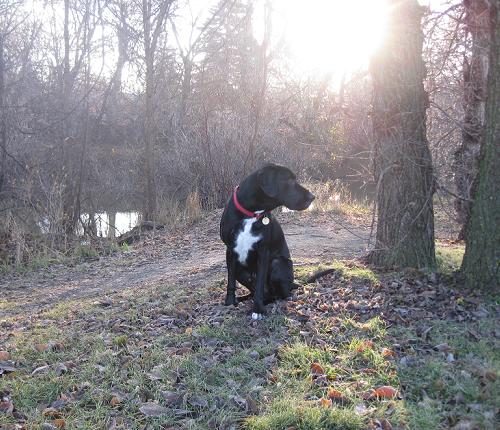
My simplified answer: There are circumstances when the best choice is to kill the dog.
That being said, I also believe every dog can be rehabilitated to the point of living an almost normal and safe life. It’s just that resources are usually unavailable, the risk of a person getting injured is too great and more laws are out there banning dangerous dogs.
I admire 4 Luv of Dog Rescue for honestly posting info about the impounded terrier on its home page and admitting he would not be rescued. I’m sure the organization will get at least some negative feedback for this choice.
No other shelter or rescue group in the area stepped up to help the terrier either. Adopt-A-Pet of Fargo Moorhead did not. The F-M Humane Society did not. 4 Luv of Dog Rescue was the only group I am aware of that at least acknowledged the dog. 11/27/09 edit: The pound would not release this dog.
No one helped this dog, and everyone who is a true dog lover should feel at fault for the result.
Euthanizing an aggressive dog
My own parents – two of the world’s greatest dog lovers – had their aggressive spaniel “dealt with” when I was about 3 years old.
I’m not sure if Abby ever got a new home, but her chances were not good. Dog aggression is a serious issue, even more serious when a 3-year-old and a baby are at risk.
In his book “A Good Dog,” Jon Katz wrote about the intense bond he shared with one of his rescued border collies, Orson. Anyone who criticized Jon’s decision to euthanize Orson after the dog attacked multiple people is missing something.
Confinement, medical treatment and endless rehabilitation are always choices, but not necessarily options in the best interest of the dog or the people who love him. No dog is worth the life of a human.
As for the terrier supposedly euthanized in Fargo last week, he is one example of why more work needs to be done – more communication, more education, better information on training, on socialization, on exercise and adoption.
It’s not just the big dogs, the shepherd mixes and the pitbulls that end up as victims. It is every dog.
Do you believe it is right to euthanize an aggressive dog?
Related posts:


November 24th, 2009 at 2:40 pm
I’m torn on this issue because I haven’t had experience with dangerous dogs. But even one of the Vick dogs had to be euthanized. Even Nathan Winograd has written that there will always be psycho dogs. But a Jack Russell? I don’t want to think the dog was beyond redemption. I hope they exhausted every alternative and rescue organization.
November 24th, 2009 at 2:43 pm
It’s certainly unfortunate if a dog has to be euthanized for something that could have been prevented by humans. The bigger problem is that most cases of neglect or poor training could have been prevented. Psychological damage can begin with poor breeding too. When there are thousands of healthy, happy, well-balanced dogs that are homeless due to humans, I cannot see keeping a dog alive under medication to calm it from being aggressive or dangerous. Who could say that those dogs that are so aggressive are truly happy being that way.
November 24th, 2009 at 4:08 pm
Thank you Jan and Valerie. I highly value your opinions.
November 24th, 2009 at 5:11 pm
That is very sad.
There are very very few dogs who are *born* mentally unstable and incapable of living safely with humans.
Most dogs who are aggressive became that way as a result of something people either did or did not do. I think that by the time you wanted people to step in and help in this situation, it really was too late. The time to help these dogs is *before* we get to this point in the story, and as you noted, that can only happen with more education (& perhaps better enforcement against puppymills & dangerous backyard breeders).
It is extremely time and labor intensive to rehabilitate an aggressive dog in the hopes that he or she will become “ok” or “near ok” to be around people. There are critical development stages, and if they were missed, you are always playing catch-up. Some dogs may never be safe with people. I understand that shelters have to care for many dogs, and that they simply don’t have the resources to even try with an aggressive dog in the hopes that he may get adopted. It is sad, but that doesn’t make it the fault of the people who care at this stage of the situation.
Two of the saddest tales I ever read were from Lisa Duffey-Korpics’s book “Tales from a Dog Catcher.” One was a family that insisted on euthanizing a dog of a family member who had died, even though someone was hoping to adopt the dog! The other was a family that was creating an unstable, aggressive dog, and the dog was repeatedly biting children. Ultimately, they replaced that dog with a new puppy, and never gave him a chance, even though he was not aggressive when outside that environment. Wow, did I cry when I heard about these poor dogs!
November 24th, 2009 at 7:43 pm
I maintain the 4luvofdog.com website. I had a very difficult time trying to determine what to post in regards to the status of that little Jack Russell terrier. But I felt that the truth needed to be told. What really upsets me is how easily his fate could have been different. Why didn’t the owner come looking for his dog? Why didn’t the owner put identification tags on his dog? Why didn’t the owner contain his dog in his own yard? I don’t know the dog’s exact story but I suspect he had been hit by a car (I do know he was taken to the emergency vet clinic) and was probably in pain and very scared. The dog may have been the sweetest dog ever but was probably too scared to allow anyone close to him. I do know that the gal who attempted to evaluate him tried very hard to get the little dog to trust her. The decision to let him go was not an easy one.
November 24th, 2009 at 7:55 pm
Very, very good points, Shay. I will have to read the stories you mentioned from “Tales from a Dog Catcher.” I guarantee you I will cry as well!
Thank you, Patti. I’m glad you posted the truth about the Jack Russell.
November 25th, 2009 at 8:27 am
There was a time when I felt that any dog could be rehabilitated given enough time and under the proper care. I am of the opinion now that “enough time and proper care” are very limited resources.
After years of doing rescue, I am now of the opinion that many in the public have an incorrect view that rescues have problems and that’s why their people gave them up. This is very frustrating as so many of the dogs in rescue and in shelters are merely victims of circumstance beyond their control. They are perfectly nice pets.
Many years ago a person I knew who was involved in rescue told me that she wanted the dogs going through her rescue to be able to give rescue dogs a good name, not reinforce people’s perceptions that rescues came with overwhelming problems. I thought it was a little heartless at the time, but now I find myself agreeing with her.
While I am greatly saddened by the fact that so many dogs are being euthanized, I think rescues at times need to weigh carefully the uses of their often very limited resources and channel those to the most adoptable pets. Not that it isn’t with heavy hearts that they make these decisions.
I still stand by my opinion that these problems won’t be eliminated until individuals start taking responsibility for their own pets, not passing that off onto county shelters and rescue groups.
November 25th, 2009 at 10:14 am
Thanks, Marie. I’m with you, enough time and proper care are very limited resources. Even those who are heavily involved in rescue are not always the most experienced or trained when it comes to dogs. They are often just passionate animal lovers who don’t know what to do with a wild, scared or dangerous dog.
November 25th, 2009 at 11:22 am
HI!—I just want to let you guys know there is a website for Rat Terriers, terrier mixes, whatever called rat-terrier.com—They are all very loving people (I am also a member) and they try to do anything and everything to get rat terriers into a loving home and plenty of active fosters are on this page all day long in case you ever get another rat terrier in a situation like this!
I do beleive this dog could have been rehabilitated like the rest of you guys especially by someone that has had experience with many rat terrier fosters, it is sad that he had to be put to sleep but I also understand that it was hard to evaluate him and he could have had something terminal wrong with him too!
Just a sad story all around, and yes I know this happens every day!
November 25th, 2009 at 11:27 am
Thanks, Heather!
November 25th, 2009 at 4:13 pm
Lindsay,
The book is very interesting, and, fortunately, some of the stories have happy endings too.
Marie,
I agree with you about dogs coming into rescue situations. That’s why I think it is so important that anyone who has adopted a dog from a shelter or a rescue situation should remember that your dog is an ambassador for other dogs in need of homes. It never stops to amaze me how many chances we get for that. We get stopped on the street when we’re just minding our business on a walk, or we wind up in conversations with people whom I’ve asked if we can approach (she’s very friendly and likes to say hi to everyone, so I’m on the look-out for good body language from people).
Nonetheless, there are still some people who are surprised at just how wonderful a dog can be, even though *someone* has surrendered her. The more you know, the more you realize how many dogs are surrendered for reasons that either have nothing to do with the dog (cost, relocation, etc.) or that have to do with obvious normal dog non-problems (dog got too big, dog needs exercise, etc.). But there are still a lot of people who don’t realize this. I view her good behavior & approachability as a great opportunity for us to help all those other dogs who still need a home, and I’m not shy about offering information on rescues.
At one local dog park that I go to, it’s funny how “came from a shelter/rescue” is a source of pride. Anyone new coming is immediately asked which shelter or rescue the dog came from!
November 26th, 2009 at 9:22 am
People around here are proud that they have a rescue dog as well. It’s almost looked down on if you got your dog from a breeder or a petshop.
November 26th, 2009 at 12:15 pm
On the subject of people not taking responsiblity for their dogs, I found a sad situation today. I take my dog running frequently in the country around Fargo, and today I noticed something that looked a little off on the side of the road, so I went to check it out, and it was a dead beagle mix dog. It appeared to be frozen to death as there was no trauma to it, no open wounds or anything like that. I wish I had found it earlier, before it was beyond help, but I guess that’s just not the way it is. I know people will take their dogs out to the country and just let them go when they don’t want them anymore…and that really doesn’t give a dog a fair chance at life. I hope that this dog did not suffer, and I also hope that people become smarter and realize that their actions directly affect the lives of their pets.
November 27th, 2009 at 12:55 pm
Ugh, that is so horrible. Unfortunately that is what happens. I feel bad for that dog and how it had to die all alone.
November 27th, 2009 at 1:17 pm
Just so everyone is clear– the pound that the Jack Russel was in refused to release the dog, due to his behavior. 4 Luv Of Dog Rescue had no choice in the matter, the evaluator (NOT a volunteer with 4 Luv Of Dog Rescue) made that decision.
Let’s all hope his story will educate people on the importance of properly caring for and identifying your pet. I would be horrified if one of my dogs had to meet an end like that JRT, and I will do everything in my power to make sure that doesn’t happen.
November 27th, 2009 at 1:44 pm
Amy, thank you for clarifying that info.
November 29th, 2009 at 1:58 pm
In my entire career of training dogs I’ve recommended euthanasia in only one case. The dog obviously had a chemical imbalance that didn’t allow him to process stress like other dogs. A dog’s capacity for training depends on their ability to process stress and as a result this dog had very little potential for improvement.
The truth is that the main resource in rehabbing these dogs is EXPERTISE, not necessarily time or effort or a good attitude.
I don’t want this to come across as boastful but I don’t think I’ve ever had an aggressive dog (except for the previous mentioned one) come to stay with me that hasn’t been turned around in a couple days and couldn’t be considered a very low risk. It’s completely dependent on me, though, and that is where I have to work heavily with clients to make sure that they adjust how they interact with their dog.
Once you develop the expertise to fix a dog like this it is quite simple. The bleak truth, though, is that most rescues, foster families, adopting families, etc. don’t have this expertise which is why I can’t fault an organization like this for finding themselves forced to euthanize a dog that seems like a difficult case of aggression.
It’s tough to know where the answer is. Is it in better training education for rescues? Is it better education for dog owners who are typically the ones creating these problems for rescues to clean up? Is it in the education of the people breeding these animals? I think the answer lies in better education for everyone dealing with man’s best friend.
Good post, very thought provoking.
November 29th, 2009 at 6:33 pm
Thanks for your input, Ty. Thanks for pointing out the fact that EXPERTISE is the key link that is usually missing when it comes to rescuing or rehabilitating dogs. I often see a problem in rescues where the people are very dedicated dog lovers but they don’t understand dog behavior very well. Sometimes this is a scary combination, especially when there are multiple dogs in one area.
November 30th, 2009 at 2:48 am
I don’t like it when people act surprised that it was a JRT that was euthed. I don’t believe in breed discrimination and to imply that a JRT has less of a chance of being aggressive than say a Pit is incorrect in my opinion. Out of all the Bad Newz Kennel dogs (Vick dogs) there were 69, only two had to be euthed. Pits also scored higher than Beagles in temprament tests and actually came in second with the Goldon Retriever coming in first. I had a Cocker Spaniel as a kid that had to be put down because he was aggressive to strangers and actually bit a child. This was not our choice it was forced upon us by the local authorities. I do believe and with the Vick dogs as living proof that most dogs can be rehabilitated into adoptable pets. My first dog as an adult is a rescued Black Lab mix, he just had his fourth birthday, and I currently foster a Yellow Lab mix who is an amazing animal. I also rescued an English Pointer who had been dumped off on the highway almost 2 years ago. Luckily he was found in time to be helped (I wish the Beagle would have been) although he was on deaths doorstep and nothing but a skeleton I was able to rehabilitate him from a wild dog into a loving family pet. He now lives like a king with my brother and his wife.
November 30th, 2009 at 11:42 am
It’s very sad anytime a dog has to be euthanized. I’m a
volunteer at my local ASPCA in Oklahoma which has a no kill policy. We had in the past a great dane that was so abused he was unplaceable. Our manager of operations was the only one there who could handle the dog. She personally adopted the dog where he will live out the remainder of his life in a good home. A truly “red zone” dog as Caesar puts it is very hard to rehabilitate;it breaks my heart when they are euthanized as people made the dog that way.
November 30th, 2009 at 11:47 am
Thanks, Sarah. I’m assuming you are referring to Jan’s comment that she was surprised this dog was a Jack Russell. I don’t think she was implying anything about pitbulls, just pointing out the fact that this was such a small dog. If you check out her blog (http://thepoodleanddogblog.typepad.com/), you will find that she is quite the pitbull cheerleader.
Thanks for reminding me not to judge a dog by its size. I was surprised that a Jack Russell could be considered so dangerous, and I question the decision to kill him. I realize small dogs are just as likely (or more likely) to be aggressive, but when they bite they do less damage.
Glad to hear you rescued that pointer!
November 30th, 2009 at 11:55 am
Thanks for your comment, Clifford,
It’s scary when dangerous dogs are living in regular homes. I am glad that dane has a safe home with someone who loves him, but I also hope that his new owner will find the right trainer to work with the dog so he can learn to live like a normal dog and not be a threat to someone’s safety.
And now I will judge a dog by its breed: An aggressive great dane is a bit scarier than an aggressive Jack Russell.
December 20th, 2009 at 12:47 pm
I think it should be known, though, that 4luvofdog rescue is one of few rescues that does not discriminate breeds (ie, pitbulls). They do a great job of placing dogs in responsible homes. I think instead of “shaming” 4luvofdog rescue for being unable to save this one dog, in which the pound made the decision to euthanize, we should be thanking them for all the work they do in saving many, many others.
December 20th, 2009 at 2:05 pm
I admire 4 Luv of Dog Rescue for taking in so many pitbulls, senior dogs and injured or sick dogs. 4 Luv of Dog Rescue is not responsible or at fault for the death of this Jack Russell terrier. The community as a whole is at fault.
April 11th, 2010 at 12:02 pm
I don’t believe its right but I have had to do it just recently. My dog Jake bit someone. He was deemed “dangerous” in the city of Harker Heights Tx. We did everything we could to keep him. We had to put signs in our yard, get him training, take out an insurance policy on him. We moved up to Wisconsin to be with my husband’s family, and Jake tried to bit two different people. We had no idea what was causing his aggression but it was getting to the point where it was uncontrollable. We were willing to rehome him and give him to someone who could better manage him. We loved him so much. We took him to a humaine society who said they would work with him and try to adopt him out. Well when we got there the animal behaviorist told us that he would be unadoptable. Because of our living situation (living with inlaws) and everything that had happened my husband and I made the decision to euthenize him. It was extremely difficult because he was a young healthy energetic dog. He was abused when he was a puppy and I feel in my heart that his aggression had something to do with being abused. I feel that Jake should have been given another chance…and I’m still in the first stages of grief right now. We feel guilty for having to do this. We were told that it was pretty much our only option. We truly did everything we could for Jake and then some. All I can say is to just please make euthenasia your extreme last resort.
April 12th, 2010 at 4:22 pm
I’m so sorry to hear about your dog Jake. I have never been through anything like that, and I can only imagine how hard it was. Thank you for sharing your story with us.
August 22nd, 2010 at 2:51 pm
I’d put more faith in Jon Katz’s decision if it wasn’t clear that he needs his dogs to earn a living. I read his first book, Running to the Mountain, and the picture of Katz that emerged was of a very narcissistic man.
He bought a cabin that his family could not afford just –guess his working wife either had to work more or pinch pennies at home. Or else they changed their minds about helping his daughter with college–that was one reason his wife opposed it.
He had two labrador retrievers. He had them euthanized in the early stages of hip dysplasia–he says that he knew they would not want to suffer through the disease (Hello! Medical management, anyone?).
What is clear is that he had just gotten a young Border Collie and wanted to spend all his time with the Border Collie. That Border Collie was Orson, whom he later euthanized for aggression.
Is anyone else seeing a pattern here?
August 22nd, 2010 at 2:58 pm
REviews from Amazon with which I agree:
179 of 199 people found the following review helpful:
1.0 out of 5 stars Orson Never Had a Chance, January 1, 2007
By C. Ward “dog lover” (OK, United States) – See all my reviews
(REAL NAME)
Amazon Verified Purchase(What’s this?)
This review is from: A Good Dog: The Story of Orson, Who Changed My Life (Hardcover)
I have been a fan of Jon Katz since I read “A Dog Year.” I loved “The Dogs of Bedlam Farm.” I expected this book to be a tribute to the dog that brought us those books, a final tribute about a man’s love for his dog. I expected the ending to be a sad one, but the actual ending was far beyond sad – it was heart-breaking and unbelievable. I honestly thought this man loved his dog, but I see it differently now.
This is a story about a man who gave up on his dog, perhaps always intended it to be so. Perhaps a story about a man desperate for another book, another heartwrenching tale. Perhaps he tricked us all. After all, as he so eloquently writes, “I am a writer.” Maybe he is still suffering the “Midlife Crisis” he wrote about in “Running to the Mountain.” I can see in Jon Katz a man who makes rash decisions just because he feels like it, because he wants different circumstances, and this book proves it so.
He writes in a loving, heart-warming manner of his loving, close, committed, special relationship with Orson, the dog he wrote about in “A Dog Year.” Then the tables turn and he writes of his horrifying “CHOICE.” Might I add SELFISH. In horrifying DETAIL he tells the tale of Orson’s fate and he doesn’t stop there. He writes about how much better his life is without this dog. This dog whose work was Jon Katz, but Jon Katz did indeed fail him, though he reasons and justifies his actions as best as he knows how as a writer. I feel like he lied to all of us who loved his previous books. He fooled us, but most importantly Orson.
If any of you enjoyed “A Dog Year” or “The Dogs of Bedlam Farm,” I advise you not to read this book. Those two books touch the heart, caused me to be a better guardian, one in which I could relate to since I have herding dogs of my own. But how could I ever read those books again after reading this one? I can’t and won’t. It was all just a big lie.
That poor dog never had a chance in the first place.
Help other customers find the most helpful reviews
Was this review helpful to you? Yes No
Report this | Permalink
Comment Comments (12)
277 of 313 people found the following review helpful:
1.0 out of 5 stars the poster boy of irresponsible dog ownership, February 1, 2007
By pjf “pjf” (MD USA) – See all my reviews
This review is from: A Good Dog: The Story of Orson, Who Changed My Life (Hardcover)
So he has money to elaborately renovate his playfarm, to landscape and hire gardeners and helpers, to buy an ATV (the better to “commune” with nature — like he went to the mountain for solitude but quickly got MTV), and he didn’t hesitate writing out a check for a new dog not long after he euthanized his “soulmate”, but when it came to spending a few thousand for Orson to get a thorough vetting over, to build him a secure fence around an acre or two, or to even hire a competent dog trainer or a dogwalker to give him the supervised exercise the dog needs (riding on an ATV not much for an energetic border collie), Katz tells us it is immoral to spend that kind of money on a dog when there are people in his hamlet who live in tar paper shacks and hunt for food. Apparently not immoral, though, to spend the same funds on flowerbeds or repointing a fireplace, on ATVs or MTV.
He tells us he can rescue fifty dogs for what it would cost to take Orson to one specialist. But he’s already told us in previous volumes he doesn’t believe in rescue dogs, in second hand dogs, but in getting “good” dogs from “good” breeders.
This guy was too cheap and lazy to take his dog to even one canine veterinary specialist when the dog’s behavior worsened, or to build him a decent fence with a beware of dog sign, to hire even one good dog trainer. All of those things — vet care, training, fencing — are basic responsibilities that come with owning a dog. But he didn’t leash his dog when necessary (something he has a history of never doing), never put up proper fencing (Orson regularly got out of his NJ fence at home and even the puppy Clem was nearly mowed down by a semi at the farm), never supervised Orson properly around visitors. And then he was astounded when there were incidents. Orson changed his life, apparently, but he couldn’t be bothered to make the necessary allowances for basic dog ownership.
This has been his pattern through multiple years and books. When his two labs got sick, when he decided Homer his second border collie didn’t love him enough, when Orson gave him trouble, he got rid of them or they got the quick needle. Nor is it limited to dogs. Winston gets plenty of page time in this book. Yet his first response when the rooster becomes ill is to go for his gun. With a neighbor’s care it survived to roam the farm again. Surprise, sometimes a pet’s care actually takes time, or costs money. Sometimes you have to accommodate a less than perfect animal. But not Katz.
Responsible pet owners don’t justify euthanizing their pets because in the past poor people have shot their dogs when they get ill — as Katz rationalizes for not getting Orson a thorough vetting. Or because there are poor people living in tar paper shacks, so how can he spend money on a dog. That’s a mind boggling excuse from someone who used, exploited and down right set this dog up to be the “bad dog of Bedlam” so he could write lucrative books about the relationship, and who has spent money freely on just about everything else on his playfarm.
When you take in a pet, you commit to reasonable expenses — a good fence. A leash. When the dog gets sick or his behavior inexplicably changes (or not so inexplicably given his mishandling and virtual torture of Orson) you get it vet care. And yes, sometimes it does require xrays, or a specialist. People with a lot less means than Katz do it routinely. And their pets are not even their cash cows.
What is amazing is that this guy had the means, partially funded by Orson himself, and yet he did not make one single responsible effort — even while he crows about how he loves this dog. Not even to give it to a rescue organization – which wouldn’t have cost him a penny. I suppose he didn’t want them to succeed where he so publicly failed.
He does try “shamans” and animal communicators. Perhaps he thought it would make interesting copy. How does he justify that with the poor people in the tarpaper shacks, and without trying conventional medicine? But without changing his own behavior, which without a doubt contributed to this dog’s problems, you couldn’t expect much. Then, when the dog doesn’t magically turn around, he dumps it like all the others.
The story of another bad dog owner. Except he then crows about his lost soulmate, his sorrow.
The only sad thing is that if this dog had been taken in by any reasonably responsible person or rescue organization, someone who’d provide an adequate fence and give him exercise, vet care and not taunted him continually with situations that he knew were triggers for the dog — letting workman and delivery people continually come through the front fence with Orson loose when he knew Orson had a problem about that, this dog would probably have had a happy, healthy life.
You get the impression he got this dog, like the farm, as a mid life crisis egoboo. The badder the dog was, the more it fit his constructed image of them as the two misfits, “soulmates”, something he craved after getting tired of his “elderly sedentary labs” as he described his former two dogs. He screams at the Orson; he abuses him, he doesn’t provide Orson with a secure fence and he gets hit by a car, and it all makes salable copy. Then he and his wild dog go to the farm and it makes better copy. Then having encouraged or allowed Orson to get this out of control, he continues to set him up in adversarial situations rather taking the precautions any sane person would make. He doesn’t fence the dog securely from visitors, because it spoils his view of it as the “bad dog of Bedlam” who needed to be free. Then when the dog predictably fails in this chaotic environment, he makes a swift decision to kill him.
Anyone who’s ever owned a sharp shepherd could tell Orson could have been managed with a little effort. He deserved that much. But it’s obvious this guy not only knows very little about dogs, but cares very little about anything but himself. (Even as he fires up the throttle on his ATV in the middle of the night, and gloats that there’s no nearby neighbors to be disturbed, he seems totally oblivious that he just left his sleeping wife) The efforts Katz needed to keep his dog safe were possible. They were within his means. But they were efforts he couldn’t be bothered with.
He talks about how with the money he would save on not treating Orson, he could save fifty dogs. But there’s no mention of even a portion of the proceeds of this self serving book going to border collie rescue, to save even one dog. Or to the “poor people in the tarpaper shacks”. Instead he quickly writes a check for a replacement dog to one of his “good breeders”.
Orson may have changed his life but he didn’t hesitate to ruin the dog’s life, to set him up in situations that he knew made him unsafe, to let him get hurt, to not get him care, to kill him for falling into the trap Katz set, and then pander to readers for sympathy. All while raking in royalies.
This book reminds me of those people who let their dog roam loose in the streets, when wail crocodile tears when it gets hit by a car, who dump a dog at a shelter so riddled with fleas or mange that its skin is bare and bleeding, but drop in two weeks later to ask if it got adopted, and say how much they loved it. There are plenty of ignorant, lazy, selfish pet owners in the world, too irresponsible to keep animals. Katz is their poster boy.
Help other customers find the most helpful reviews
Was this review helpful to you? Yes No
Report this | Permalink
Comment Comments (30)
148 of 166 people found the following review helpful:
1.0 out of 5 stars Good Dog Meets Terrible End, October 28, 2006
By Doxie Lady (New York) – See all my reviews
This review is from: A Good Dog: The Story of Orson, Who Changed My Life (Hardcover)
I feel exactly the same way as the previous reviewer. My husband and I don’t have border collies; we have dachshunds. Dachshunds can also be very protective of their owners and territory and also have a very strong prey drive. We have a dachshund that bit one of my neighbors while we had the dog out for a walk. Their cat was out and my dog went after the cat and bit the neighbor instead (he was in such an overexcited state he literally did not know what he was doing). Note: my dog was on leash when this incident occurred. He is never off leash outside our property. Luckily this lady was an animal lover and she was absolutely gracious about it.
The incident taught me a very hard lesson…but a necessary one. I had to be absolutely vigilant about my supervision of this dog. How I introduce him. Where I walk him. I changed the leash from a regular 6ft leash to a 4ft slip lead (NOT a choke chain). I have also applied some local trainers’ ideas about noticing the early signs of excitement in my dog and learning how to channel the dog’s attention so that he never gets to the excited state. It has been over 2 years since the incident and we have had no other incidents. But, as I said, my husband and I are vigilant about our supervision. I do not take lightly the fact that my dog bit someone. I think I lost sleep for a month when it happened. But, that memory now serves as a constant reminder to me to maintain my awareness with my dog and be constant in my supervision – which really all dog owners should do with all dogs.
I have all of the Orson books and I, too, was enjoying reading them. I thought, here is someone who understands what I am going through in dealing with an anxious dog. When I went to get “A Good Dog”, I was so excited because I had enjoyed the other two books. The writing was so lovely and the author seemed to have such a deep love for his dogs. I was a couple of chapters into the book and I could sense where it was heading. I skipped ahead to the last chapters and was absolutely devastated.
For this man to euthanize his dog when he himself says that he owed Orson so much for saving him in so many ways is (in my opinion) unpardonable. To think that Orson could not be given to another person to try to rehabilitate is absolutely arrogant. I have to even sympathize with another reviewer that wrote in and asked why wasn’t Cesar Milan contacted? At least Cesar Milan always works to rehabilitate the dog – not put the dog down. But it didn’t have to be Cesar Milan…many other trainers could have at least tried to work with this dog.
My suspicion is that the arrogance of the author extended too far. How would it look to the public if he contacted another dog trainer? Didn’t he write a book about common sense dog training? (And to think I almost bought that book…) I am sure that it would be just too humbling for him to try to consult another trainer on the issue – especially another well publicized trainer. Wouldn’t that say that he didn’t know what he was doing with his dogs?
And did the author try to communicate with his “public” by putting a sign up that says “don’t pet the dog when he is behind the fence”? Even to friends. I know that this can be difficult. But, with my dog, I tell my friends who come over…do not rush up to the crate or gate and try to pet the dogs. Let me introduce you first. It is difficult for me to do that, but worth it to me. This saves my dogs and any unfortunate incident with friends and neighbors.
In the end, I just wish the best decision had been made for the dog. This dog that the author owed so much…that he “loved” so much. I think I had the hardest time with the scene at the end of the book when the author talks about the Dog Star and about how Orson knew it was time to go and about how Orson was at peace. I wish I could have taken comfort from this scene, but unfortunately it just left me with the feeling that the author was somehow trying to absolve himself from this terrible decision that he made.
(Note: I do understand that there are some dogs that are truly a danger to society. I also understand that it is necessary sometimes with truly dangerous dogs to put them down. I understand that Orson was a much bigger dog than my 16 pound doxie and could potentially cause much more harm than my dog ever could. But, I think that we sometimes label dogs too quickly as “dangerous”… I do NOT believe from what I read that Orson was truly dangerous. I do not think enough was done for him. I believe that if an offer had been put out to some trusted trainers that someone would have taken him. I wish for Orson’s sake that this had occurred.)
August 22nd, 2010 at 4:23 pm
Thanks for your opinion, Sarah. I’m a huge Jon Katz fan, so you won’t catch me criticizing him. It is never an easy decision to euthanize an animal. I respect the decision he made about Orson. I don’t know if it is the same decision I would make, but Orson was a dog that was attacking humans and that is not something to take lightly. A life behind a fence is not a good life for a dog.