
Note: This post is sponsored by Green Bark Gummies dog treats and Pipeline Pet Products.
Is your dog too smart? Here's what I mean …
I have a problem.
My Weimaraner Remy speaks English.
Well, not really … but he’s the type of dog where I’m going to have to start spelling out W-A-L-K unless I plan on going for a walk right this second.
Ok, no big deal.
But here’s an example of a real adjustment I need to make for Remy:
His release word (to break from sit, down or stay) can no longer be “OK!”
“OK” is too common of a word. Meaning, if my dog hears “OK” in a conversation across the room, he’ll break from position.
Even if someone's quietly talking on the phone like, “Jim, OK, that sounds good I’ll be there at 7.”
My dog hears: “Blerp, OK!!!!!!! Bla, bla, blerp.”
Smart.
Now, you could argue that my dog should be taught that the release cue only applies when it’s coming from me while making eye contact. This works for my more mellow dog Ace who rarely challenges anything.
Or, I could just pick a different word.
Something like, “Free!” or “Break!” (Any word would work.)
How to get your dog to stay until you release him
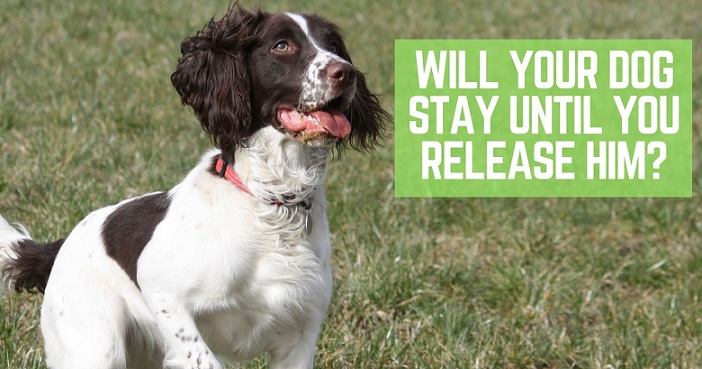
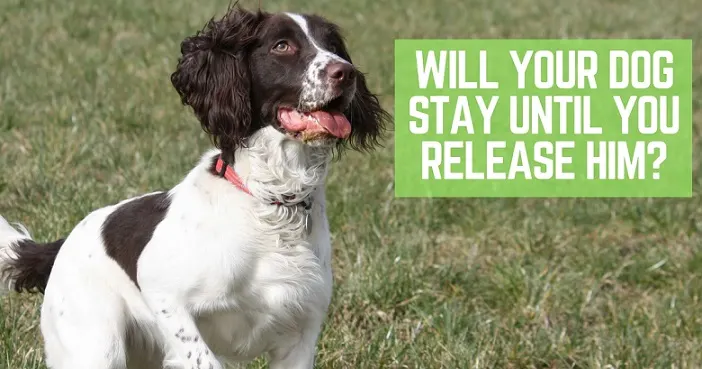
Dogs need to know that “stay” really means “Stay until I release you.”
Otherwise, it’s a guessing game for them and you stand there repeating stay … stay, stay.
Just say “stay” once. Then release with whatever word you choose.
If you don’t have a release word for your dog yet, just pick one now and get started. Do you have a new puppy or new dog? Perfect.
(If you have a release word already, let me know what word you use.)
Rewarding my dog with treats while he's still staying
It's natural for dog owners to reward their dogs with treats immediately after the dog does something “good.”
However, when you're working on the basics like sit, down and stay, it's better to calmly give a treat while the dog is still staying.
That way, your smarty-pants dog won't try to break from position early in order to get the treat (Remy!).
And if you have a dog who is explosive with energy, like Remy, getting him to just sit still is a challenge. So rewarding him when he's actually attempting some sort of “calm” is important.
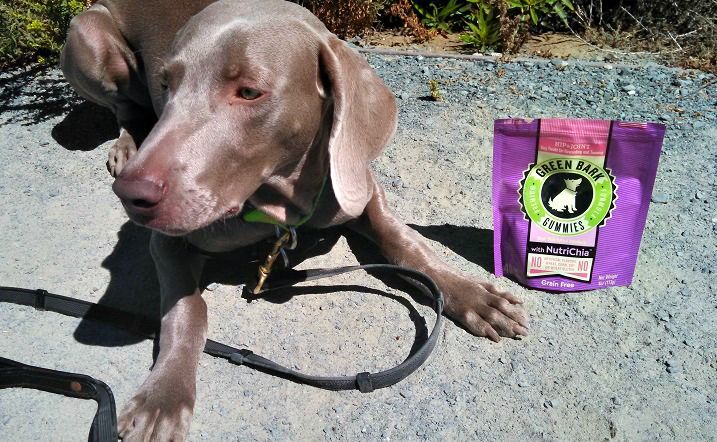
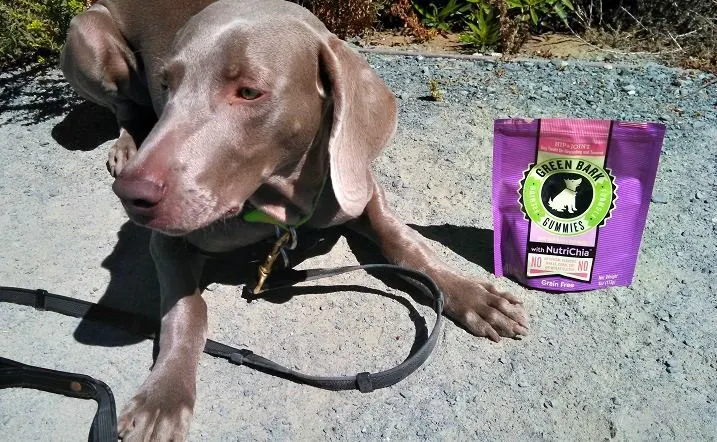
I'll tell Remy “stay” and then pause for a few seconds, give him a treat, remind him “stay” again while I take a few steps back, then calmly return and give another treat and THEN release him. “Break!”
The treats we use—Green Bark Gummies
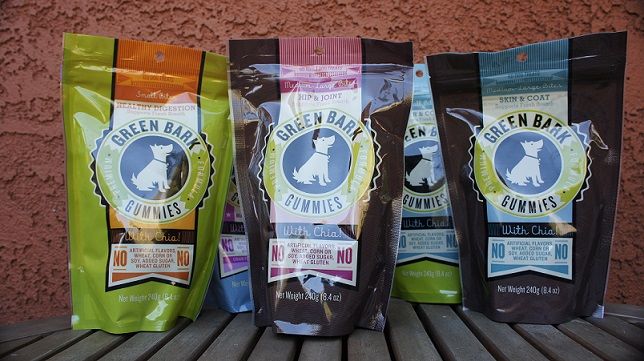
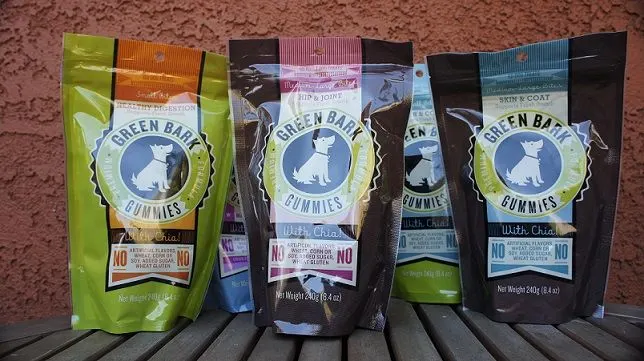
The treats I use for training my dogs are Green Bark Gummies. These are soft, healthy treats made with high-quality ingredients such as whitefish, chicken and duck. The treats include the patented NutriChia, which is a sprouted chia ingrained with three omega-3 fatty acids—ALA, EPA and DHA.
Green Bark Gummies are available in 4-ounce bags for $4.99 here.
Is your dog trained to stay until you release him?
What word do you use? Let me know in the comments.
Sam
Tuesday 3rd of January 2017
Bindi is my 3mo Border Collie/Aussie Cattle Dog mix. Her release is "That'll Do." It's a totally unrelated herding command (she will never be a header) that I think is cool and reminiscent of her heritage. Just starting out with this training. Do you think this release command is too long?
Lindsay Stordahl
Tuesday 3rd of January 2017
I think that will work!
Annette
Monday 12th of December 2016
We have an 8 month Airedale who seems to constantly LICK things, people, shoes, rugs, fireplace. Just thing. She licks my shoes while I'm putting them on. Licks my pants when I'm putting them on. We've told her no over & over. She still licks..
Lindsay Stordahl
Monday 12th of December 2016
This will hopefully be something she grows out of as she gets older. Right now she's just full of energy and probably still wants to puppy bite a bit but instead she is licking. My 9.5-month old weim pup does a lot of biting and licking too, and it's very annoying. Telling them "no, no, no!" doesn't seem to help. I think it's best to work on teaching them an alternative behavior like getting them to sit or lie down on command (and stay) or getting up and leaving the room when they get too annoying and can't settle down.
Suz
Friday 9th of December 2016
My release word is "free". When I was teaching my dogs to skijor, I got into a bad habit of saying "ok hike" so now whenever I say "ok" they think it's time to run.
Colby
Friday 9th of December 2016
My release word is "Ok", but I'm with you and don't really like that it's such a common word. "Ok" is actually something I picked up from guide dogs. I will have more leeway with my next puppy since he won't be affiliated with any school so I'll probably change "Ok" to "Release". A couple questions about the Green Bark Gummies: Are the treats training size (tiny)? Are they low, mid, or high value treats to Remy and Ace?
Lindsay Stordahl
Friday 9th of December 2016
I consider the GBG mid to high level. They are on the high end for treats (kind of like Zuke's minis) but not quite up there with real food like pieces of ham or chicken! They are about the size of a stamp, so I often rip them in half for training.
Michelle
Monday 5th of December 2016
Sasha's release word is 'pahshlee' which is Russian for let's go. We're working on staying until released also.