A lot of dog owners do not bother teaching their dogs to walk nicely on a leash.
That’s fine.
Some of us might work on this “heeling” or “loose-leash walking” concept part of the time. Half-assed. Maybe we get somewhere or maybe not.
Some people depend on prong collars or Haltis. That’s fine, too.
Ace and I have been working on a pretty strict heel for the last four years, meaning my dog is always at my side while on the leash. I say “the last four years” because heeling is always a work in progress. No dog or dog owner will ever be perfect.
A goofy, drooling mutt like mine has the potential to create a lot of chaos. We don’t call him Ace the Crash Test Dummy for nothing.
That’s why Ace is expected to yield to me at doorways. He is expected to walk on a leash without pulling. He is expected to save running and chasing a ball for outside.
This works for us.
I don’t obsess about being “dominant.” I just want a well-mannered dog.
Heel vs. loose leash
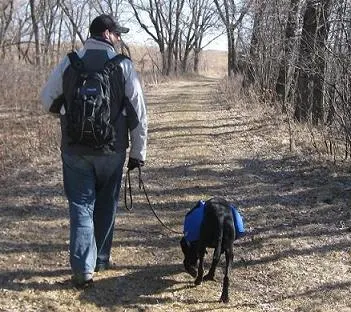
To me, “heel” means the dog will walk at my side with her nose even with my leg. The leash is always loose, and the dog knows to pay attention, to copy my pace and to stop if I stop.
There are very few dogs that actually know how to heel.
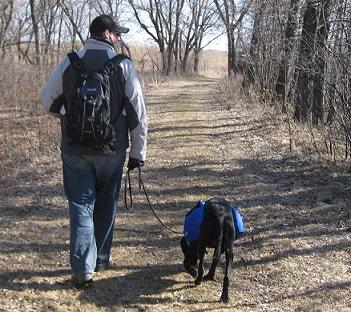
Walking on a “loose leash” means the leash should always be loose, but the dog doesn’t have to remain at my side. She might be a step behind. She might be four feet in front. Who cares, as long as she’s not ripping my arm off.
So which is better?
It really doesn’t matter. Just pick what works for you.
Most of us do some combination of the two where “heel” means “just stay generally on my left and not too far ahead.”
You have to do what works for you and your dog.
For me, at least at this point in my life, I want Ace and all my future dogs to obey the heel command. I enjoy traditional obedience training, and I admire the relationship a well-trained dog has with her owner.
I love that no matter where Ace is, I can say, “Ace, heel!” and he walks over and sits at my left side. I love that if we have no leash, he still knows where to be.
Once the dog understands and obeys the heel command, I see nothing wrong with allowing her to walk ahead on a loose leash for part of every walk or even for the entire walk.
I see loose-leash walking as a privilege.
Why should I teach my dog to heel?
A dog that knows how to heel is a dog that is under control. This doesn’t happen by chance. It happens after the owner puts many, many hours into walking, training and bonding with that dog.
A dog that knows how to heel does not appear threatening to other dogs or people. Dogs that are pulling or walking in front usually give off an excited, dominant energy – tail high, ears up. Dogs that are walking calmly beside their owners give off a relaxing energy.
A dog that heels is safe from traffic.
She knows some self control, pays attention to her owner.
A dog that heels is a dog that gets to go along to more places. Walking with her is relaxing, and her leash is never tense.
She knows to look to her owner for direction, even under the stress of new surroundings, new people, new smells, new dogs.
A dog that heels is a dog people admire.
How do I teach my dog to heel?
Teaching a dog to heel does not have to be strict. It should be fun.
The concept of heel is often associated with negativity such as pissed-off owners yanking on choke collars or keeping the leash as short and tight as possible.
It doesn’t have to be like that.
I train a dog to heel by teaching her that we do not go anywhere unless she remains at my side. I do not give her the opportunity to get ahead.
No matter what, I hold the leash very lightly in my hand. I should be able to hold it with literally two fingers.
If I hold the leash tight or wrap it several times through my hands, the dog will try to resolve the tension by pulling. If I loosen my grip, the dog relaxes.
Training collars are great tools to give you more confidence and control.
I don’t care what you use – a choke collar, Halti, prong collar, Gentle Leader, shock collar, harness – they all work for certain dogs. I’ve used and recommended each of them.
If you need to correct your dog for sneaking ahead, then correct her with a quick, light pop of the leash. This is not meant to cause fear or pain. Think of it as a tap on the shoulder, something that might cause your dog to think, “Oops! Didn’t mean to get ahead!”
If you are doing your job by remaining calm, staying positive and holding the leash lightly, a slight correction will get your dog’s attention.
And when she’s doing something right, by all means, let her know!
“Wow! What a good heel! Good dog!”
Another trick is to quickly switch directions. Often.
When you walk in a straight line, the dog will focus ahead and try to get to that anonymous smell as fast as she can.
So, change your pace. Walk in circles. Zig-zag. Turn and run the opposite way screaming “Wooooooo! Go, Ace, go!”
You want your dog to have fun!
Also, make sure your dog is getting enough exercise and visiting plenty of new areas. Heeling comes much more naturally if your dog is well socialized and well exercised.
Why should I teach my dog to walk on a loose leash?
Although I believe teaching a dog to heel is important, the more laid-back concept of loose-leash walking is growing on me.
Humans have bred dogs to do all kinds of work that involves running ahead of us.
We are slow and dogs are fast.
Huskies and malamutes are bred for running ahead and pulling sleds.
Sporting dogs are bred for running ahead to flush, point or retrieve birds.
Shepherds and collies are bred for running ahead to herd and control sheep.
Terriers are bred for running ahead to chase mice, rabbits and other prey or pests.
Most dogs are designed for speed and work.
Why do we get so upset if our dogs have a hard time heeling?
For one thing, it’s about control. There’s a lot of hype about being “dominant” over your dog or being a leader to your dog. A dog that walks ahead of you doesn’t respect you, a trainer might say.
Try not to think of it that way, especially if you’re a control freak. You’ll just end up feeling frustrated with your dog.
My boy Ace is a very submissive dog. It’s clear he sees me as the leader, yet he still pulls on the leash if he gets the chance. And there are plenty of scenarios where he won’t “listen” to me.
Ace is just being a dog. There’s nothing complex about it.
Stop worrying about what everyone else thinks.
Sometimes I worry about what other people think of me and my dog. Do they think I’m training him right?
Who cares.
Forget about that “perfect” dog your friend has. All dogs are perfect sometimes.
Forget about your brother. He just thinks he’s the better trainer.
Forget about what Cesar might do. His mistakes aren’t on TV, but he still makes them.
Every dog is different.
Certain breeds and certain dogs are a lot harder to train than others.
Worry about yourself and what you want from your dog.
Focus on the things your dog does well. He’s probably a very good dog.
If the concept of heel brings out frustration and stress for you and your dog, it’s not worth it. A walk with your dog should always be fun and relaxing. Try the loose-leash walking concept. What’s the big deal?
How do I teach my dog to walk on a loose leash?
Teaching a dog to walk on a loose leash is usually associated with positive reinforcement dog training. The dog can walk ahead, but once the leash is tight, the owner stops. The idea is that the dog goes nowhere unless the leash is loose. It’s a very simple concept, and it works well as long as the owner is consistent.
For some dogs, their favorite treats or toys are the perfect rewards for not pulling. For most dogs, moving forward is enough of a reward.
This means you are going to have to ditch that Flexi, retractable leash for now. Flexi leashes reward dogs for pulling, and since you’ve read this far, I’m assuming you don’t want your dog to pull. Once your dog has mastered loose-leash walking, then maybe the Flexi can work.
If your dog has already mastered the heel command, then walking on a loose leash will take little effort.
All I do is tell Ace “OK!” and he understands he has the freedom to trot ahead, to smell mailboxes, to pee on snowbanks. Every five minutes or so, I tell him “heel” and he is expected to return to my side.
Do you teach your dog to heel?
There’s no right or wrong way to go about dog walking.
The best walks for Ace and I are actually when there is no leash at all – no rules, no worries, no agenda.
Our only goal is to spend time together.
Discuss this topic further on That Mutt’s new dog forum – Should I teach my dog to heel?
Recent Search Terms:
- how to stop a puppy from resistance when walking
- trainndog heel
- train a dog to walk o heel t
- my dog wont leave me alone if i have his ball
- my dog gets excited when other people walk by on the leash how can i stop that
- how to train a black labrador puppy to heel outside
- teaching heel fun


I have to wait for at least a year until I get a dog, but in the meantime, I’ve really appreciated your blog and the helpful tips you give! I’m planning on trying these techniques with the dogs I walk for friends and dogs at my local SPCA, where I volunteer. Thanks for your encouragement and keep up the good work!
Glad you found my blog helpful! Just read your post about your dog Emma. Hold onto those positive memories of her! Sounds like she was a great dog. Can’t wait for you to get another.
I love this post. I have a dog who is just over one year old; he and I have worked on heel almost solely. The “ok” is given when he “tells” me he needs to go potty or that he really wants to smell that bush the cat usually hides in. I let him sniff around and then “let’s go” and back to “heel” shortly after. The other day we went to a park and it was all but no leash… I had a long leash on and let him do his thing… pee wherever and sniff around. I need to do that more. He had a ridiculous amount of time. He’s a terrier schnauzer mix and LOVES to chase so off leash scares me too much.
Long story short… I love your instruction on how to train loose leash. He is good at heel, so maybe some loose leash would add to the excitement of our walks which he already loves.
Thanks so much!
If you think the loose-leash walking will interfere with your “heel” training, make sure to start every walk with heel. Then after a good 20 minutes or so, try some loose leash walking as a reward.
To get the dog walking on loose leash – the rules are simple. Loose leash – we’re walking; tight leash – we’re not.
Our guys know heel, but we don’t use it very often.
It is such a simple concept, not easy though!
I remember the first real walk I took with Ace. He was crazy hyper back then. Every single time I took a step forward, I had to stop because he wanted to barge ahead. It took us ten minutes to get to the front door and I remember feeling embarrassed as we walked down our apartment stairs because people were staring at me as I kept stopping and making my dog return to my side. He really did learn a lot on that first walk, though.
As a professional Petsitter/Dog Walker with independent contractors, it can be difficult to master consistency when we share a walk. I love how you explained the ins and outs of each and I will be forwarding this to my walkers

For the dogs I walk (and my own), I like the loose leash, but only after, as you mention in reply to the other Jen, there is a good 20 minutes of “heel”. I didn’t used to like the Flexi at all because owner’s tend to fumble with them, but I use them for every dog now (mostly for hikes and open park sprints/goof off time) and find that if I keep them locked at the loose leash length, the tap on plastic by the locking device keeps me focused, as well as alerts the dog that they need to pay attention. To me, it’s a tool that helps keep me from chasing butterflies…I’m a bit like a Golden
I’m a huge fan and advocate for well-behaved, happy dogs and I’m so glad to read an article that is completely focused on the dog…it’s their walk first.
Great to hear from another pet sitter/dog walker. I also own a pet sitting/walking/running business. I hope this post can help some of your contract workers!
I totally see what you mean about the Flexi. In the wrong hands, though, the Flexi is so dangerous. It just depends on the dog and the handler. I do use a Flexi for a little Pomeranian, and she responds well to that clicking sound of the locking device. It’s enough of a “correction” for her never to pull. She walks perfectly on it.
Yes, me, too! Thanks again

Flexi…the constant debate. Seriously, I’ve seen some doozies of accidents with those things. They absolutely can be dangerous. I don’t usually recommend them unless I have the utmost confidence in the person holding onto it
Again, wonderful article!
Thanks, Jen!
Lindsay,
This is a really great post. It’s also quite humorous! (especially the comment about the brother! ha!) Some dogs seem more resistant to heeling than others I’ve noticed (yes, I mean Sophie). Now I don’t stress so much about exactly where she is at my side as long as she isn’t pulling. I know our dogs aren’t really all that well trained to heel, since they would not do it without the leash…
If anyone is having an issue with aggressiveness with their dog when they meet other walkers with dogs, the gentle leader does really help with that. I love it for our golden. She is a great heeler most of the time, until she meets another dog and then she forgets, to put it mildly. The gentle leader totally solves the problem. I love it.
Yeah, sometimes I forget how well the Gentle Leader can work to prevent leash aggression. With choke collars or prong collars, the owner is constantly yanking on the leash, which gets a lot of dogs even more worked up. The Gentle Leader tends to calm everyone down. The only problem is you end up depending on it.
Great post! Very informative.
I have to admit our first dog we relied solely on the prong to correct pulling and never worked her actually learning heel without it.
With Sophie, I used the prong except in obedience classes. She has a great heel in class (we are still working on shaping it into a command). So about 3 weeks ago I decided to stop using her prong on our regular walks.
It has been a little hard, never realized how much I depended on the prong. But we are making progress. I do release her to sniff with a “go sniff” command and she can leave my side but other than that she needs to heel. A work in progress for sure.
A lot of people rely on “training” collars but do not use them to train the dog. Ace is also really great at heeling while in class. Most dogs are better in class than in the “real world.”
When we first got Charlie he would choke himself because he pulled so hard. Now he doesn’t pull at all and he… sort of knows how to heel.. When I say “hey” he comes behind me. This is good if we’re on a walk and we see a dog that isn’t on a leash.
Good boy, Charlie! That’s cool that you can get him to go behind you.
Thanks for the post!!!! Its funny how some people teach a couple different heels or variations of them. Belle is starting to get the more traditional heel with her looking at me. its all about time and patiance… And consistency!! That is my problem, consistancy!!! But our walking is better and I even got Belle to walk by another dog without looking at it with our heel! And we were off lead! Another cool thing!
Wow, that’s great that you were able to do that with no leash! Ace can heel around the neighborhood with no leash, but I don’t trust him to stay at my side when we come across other dogs so I carry a leash with me. I have to use treats or a leash or a ball to keep his attention if we see another dog. But I am pretty picky and don’t want to give him the opportunity to screw up.
Excellent post, agree with you.
I love that my dog can heel well and it started with loose-leash walking at heel position, then we moved on to off-leash heeling which is what we do most of the time as long as it’s safe.
It’s not perfect, and the leash didn’t come off until he had strong recall, stay/wait, and followed directions even when emotionally charged up (which we are working on developing further), but he does a good job.
I agree that it’s not about dominance. It’s about safety of your dog and others and developing self-control.
And I love how you say the real reasons why dogs tend to go out in front of us. Besides, I read once where the pack leader didn’t physically lead the pack (as in the first dog in a line or ahead of the group), but instead was near the center. This makes sense – it’s easier to know what the group is doing when surrounded by the group, than being ahead and everything happening behind you.
Glad to hear you agree! Ace is a lot like your dog. He’s nowhere near perfect, but overall he does very, very well off leash and I couldn’t be happier. I would like to challenge him and myself this summer by doing more off leash heeling. I need to work on getting him to respond even when he’s emotionally charged up. I’m going to try some work with using treats and/or games as a reward. He’s crazy about fetch and tug and food!
I like to start up a game, get him going really good, tell him to speak (he gets happy when I do that lol) and just rile him up until I’m getting intense play growling (it sounds like he’s going to eat my foot).
Then I call him to “finish” and then we start heeling a bit. Of course, he’s still going to be all bouncy (and often, he’s looking at me, which is a plus!) and if he gives me, say a few steps, then it’s game time again!
Oh, and definitely throw in food. Once I thought I was going to put him into excitement overload. Games AND awesome food treats?! He had some wild looking eyes then. They say dogs came from/are close to wolves – he looked like a predator for sure.
Then I repeat the process, asking for more “wait time” and longer heeling – but not letting him get “calmed down” too much.
It’s a work in progress and the process probably needs optimizing, but that’s what we’re going with for now!
I’ll have to try some of those things. My dog is a very calm dog, but he can go into that obsessive, crazy, hyper state over a toy. He’s a retrieving nut. I think it would help to get him excited like you describe and then work on calming him down quicker.
I taught my dogs to heel starting with heelwork to music and training heelwork for doggie dancing. I love it! It’s such a fun way to teach a good heel and it’s creative and really makes your dog focus on me. I highly recommend anyone who want to teach heeling or wants to do something creative and fun with a dog who is already a good heeler to check it out. You can see some good videos and get some good advice on my site http://www.DoggieDancing.com
Another suggestion for teaching your dog to heel is to take him to places like Home Depot or Lowes and work on heelwork in those stores, I find it is less distracting to your dog than normal walks and less liklihood to run into other dogs.
Home Depot allows dogs? If that’s the case, Ace and I will be taking a Home Depot fieldtrip very soon
[...] reading Shoud I teach my dog to heel? « My dog won’t leave me alone Man’s Best Friend [...]
This opened my eyes to the reality (and truth) that what you see in TV and real life is very much different. I have been attending dog training classes and working my 9 month old Doberman for 5 months now on loose leash walking (ideal scenario) and I get so frustrated to the point of strangling him sometimes because he acts differently one week or one month from the next! Now I understand that a dog can never be at the ideal position AT ALL TIMES.
The first time I taught him to walk on heel, it took me 15 minutes to go from end to end of our house. I did the stop, figure 8, zigzag, diagonal, circling posts, trees, cars, trash bins, every possible ways I could think of. I’ve graduated from choke chain to prong collar.
My dogs 2nd home is Home Depot and PetSmart. We go there at least once a week. We visit different neighborhood everyday, and one time took him with me when I needed the ATM machine on a weekend!
Thank you so much for posting this. Now I know, I still have a long ways to go (forever) and that the IDEAL HEEL POSITION can only last that long. Not even the teachers (going on 3rd level now) told me about this. But I will still continue with my training classes.
A lot of dogs are perfect in a class setting or in an obedience competition, but no dog is perfect all the time. My lab mix is 5 and I’ve had him for four years now. He heels most of the time, but he will still try to pull or at least sneak ahead when we visit “exciting” areas. He does really, really well overall, though. I’m happy for all the work he and I have done together.
My foster dog Cosmo has been with me for five months now and he still has terrible leash manners. He is just naturally a dog that is more agitated by distractions and he seems to be naturally more of a puller, too. I haven’t worked with him anywhere near as much as I should. He has made small improvements, and I realize it will always be a work in progress.
I’ve been trying to work on heel with my dog. The problem is that he marks constantly! I try to have him stop once I think he’s relieved himself, but I just end up constantly saying “Leave it!” on our walk. I know it will take time, but am I doing it right? I also want to make sure he empties his bladder and does not go in the house even after we’ve gone on a long walk! How do I get him to know when it’s time to just walk and not pee?
With a firm “No!” and a tug on the leash. Then every 10 minutes or so let him sniff and mark whatever he wants as a reward for good heeling.
I started out on a long leash (15 ft) with our Lab as soon as she was old enough to go for walks. At first she stayed right at my side, then as she got older, wanted to explore a bit along the way and I’d give her some slack. A long lead is easier to use than a Flexi – you can just loosely loop it around your hand to lengthen or shorten as needed. I think this taught her the concept to stay close to me (ie not run off alone). When she got a little older, I taught her to walk by me as needed (in congested areas) and allowed her to lag behind to smell something or ahead to explore a bit when we had room. She seemed to pick up on allowable space just by sensing the tension on the leash.
And this also instilled the concept to remain in my vicinity when we go to the woods, trails or parks where I allow her time off the leash.
Yes, all dogs should master the heel command as it is very useful but I don’t expect my dog to plod mindlessly by my side the whole time. Why take them out for a walk and expect them to ignore everything?
Now, when we’re going to the beach? We’re still working on that. I have to constantly remind her not to literally DRAG me. She’s like a Dr Jekyll and Mr Hyde when it comes to a walk through town or a walk to the beach! What do you use to distract a dog when their all time favorite thing is the water?
The Halti worked for our other Lab (a couple weeks and never had to use it again). With Esme? Absolutely USELESS. The only way to get her attention is to just stop and stand – waiting. That’s the worst punishment I can inflict upon her when she’s in that gung-ho frame of mind.
Yeah, it’s just a matter of time and being consistent. We don’t live anywhere near a beach, but my dog gets pretty excited at certain parks. I do the same as you – simply stand there until he heels. This works only because he understand heel and has the ability to maintain some self control because of all our training. It sounds like your dog is similar. It doesn’t work so well with dogs that haven’t mastered heel in areas without distractions, let alone areas with high levels of distractions.
I actually found this post several months ago as I started teaching my my one-year old Rhodesian Ridgeback to heel and applied a few of your suggestions. I’m really glad I stumbled my way back here!
Now, my ultimate goal is to turn her into a running dog. She does fairly well on long walks with minimal deviation from the heel. Since she’s just a year old, we’ve recently started jogging (maybe 100 yards at a time or so – she won’t get any serious distance until she’s old enough). However, this has turned into a challenge. Rather than trotting along beside me, remaining in a heel, she will kind of quarter along, hopping and looking back at me. She also tenses up every few seconds as if she is about to take off running full speed, but then returns to her hopping routine. If I stop jogging, she will return straight to the heel.
Honestly, I’m sure we are a ridiculous sight as we go through the park. Nevertheless, she’s been doing this since I started jogging with her about a month ago. Part of me thinks this is just the puppy in her, but I’m not convinced. Can you offer any suggestions? I have yet to find anyone who has experienced or tackled this problem!
When I run with some of my more hyper, younger dog customers, they do what you are describing. To me, it just seems like excitement combined with pent-up energy. I mostly ignore it while holding onto the leash right by their collar so they don’t have enough slack to go out in front or jump on me. I don’t encourage the excitement. I just keep on running and within 100 yards or so the dog usually mellows out and copies my pace. So I think with your dog, she is just super excited that you are running. It’s probably kind of a game to her right now since you don’t run for very far. I think once you add some distance she will stop doing this as long as you keep her “reeled in.”
Congrats on the heeling work!
Thanks for this post – I really appreciate and enjoy your point of view. I would like to share with you my experience with heeling, although what I learned was never given the heel command.
A couple years ago I went through this intense training program that taught me that my dog must be at my side at all times and never out in front while on the walk. I was the pack leader, after all. All of us in the class where instructed to use a martingale collar, although some of the dogs had to be given a star-mark or prong collar, and we were instructed on how to give several different kinds corrections: a hip-check, a leash pop, a leash slap on the nose, a butt tap from behind, or a jab to the neck were all the norm.
My dog walked perfectly by my side within the first few weeks of the program with minimal corrections (thankfully), but some people in the class continually had to yank, jerk, and jab until the dog would fall in line. Their timing with the corrections was probably a big part of their problem. But maybe their dog just didn’t respond well to this type of training either.
Anyway, at that time I didn’t know any better and I wondered why everyone in the world wasn’t teaching their dog this way — it seemed so simple. I laugh as I write this now. Just how naive was I?
To make a long story short, I have since switched training camps and I am in full support of loose leash walking. I now let the walk be for Georgia just as much as it is for me. And I love it when I see her out in front of me (6ft at max), sniffing this and that. But most of all, I love it when she chooses to walk by my side all on her own. We’re still not perfect with our loose leash walk, but I’m a-okay with that. We’ll just keep on trying!
Nice to hear your take on this, Shawna. I think you have found the perfect way to walk with your dog.
Thanks for your post – it really made me feel better about my learning process with my dog.
We got our dog Lucy in August at 2 months old from the shelter. She is maybe a mix between a flat-coated retriever and a fox terrier. Anyway, she is VERY active, and leash training was a real challenge. I went for lessons to teach her to walk at heel because she pulled a lot and never seemed able to get rid of all her energy no matter how long the walk. The trainer is good, but it was hard to be consistent and very frustrating. I used treats and then a choke collar, and it was going relatively well until I injured one of my shoulders and was not able to correct her using that arm. That kind of took the energy out of me and I felt like it was a losing battle every walk, especially as the roads became icy and slippery and she kept pulling.
Finally I decided on loose leash walking to take the pressure off. I just say “free” or “ok” to her and “stay” when she starts to pull, and this has really taken the pressure off. I still do the training to walk at heel at short intervals, and I make her sit and heel at curbs. But she pulls a lot less now, with more freedom. She is also starting to calm down a bit, now that she is 9 months old (I hope!).
I could especially relate to what you said about not caring what other people think. After I stopped caring and tried to focus most of all on bonding with my dog and being reasonable and accommodating to her desire to explore, our walks have become much more relaxed. And Lucy does better when I do ask her to heel, so I feel more motivated to extend the times she walks at heel. My trainer also reminded me that some dogs have a very playful personality and need to have positive motivation and fun to keep them interested. I think Lucy knows that if she does well at heel, I’ll let her be on a loose leash for awhile afterwards. And she is much more cooperative.
I was bothered for awhile by the notion that if Lucy was in front of me, it meant she wasn’t submissive. But I don’t think that is necessarily true. I think she still sees me as the leader, even out front a bit. If I stop or change directions, she follows. I am still in charge of the walk.
Thanks again! I will check back at this blog.
You have to do what is right for you. It sounds like things are going better when you use the loose leash method. My dog is six years old now, and he is still not perfect with heeling. He does awesome with me, but if my fiance walks with us he is not quite as good. It’s “exciting” to have someone else along!
Keep working with her as you are doing. Even if you just do some heeling for a few minutes and then “free” as a reward, it will go a long way. Sounds like you have a nice dog!
And yes, although Ace will sneak ahead of me at times, he is a very submissive dog. Pretty much every dog tries to sneak ahead.
Thanks for the info. We have a Eurasier which is a mix of chow chow, spitz and Samoyed. Beautiful but stubborn.
He is 9 months old and on lead walks around the block he never pulls and walks next to me on a fairly loose lead. Sometimes he sniffs around too much and is reluctant when I want to walk unless I give a firm tug and say come. On the whole pretty good and doesn’t drag.
My concern is that we also walk him in woods near us off the lead and he tends to shoot off wherever he fancies. When we call for him to come back he always does but he doesn’t walk close to us. This is more a problem when we go to a crowded park with kids etc. the other day a kid ran away from him and he thought this was a game and chased her ending up knocking her over. I had tried to stop him! I want him to be free and run around chasing squirrels but I also want a tad more control when he is off the lead. What do you advise please???
Thanks
Job
I would limit his freedom for now while continuing to work on his off-leash heel and coming when called. Allow him off leash in quieter areas where you know you will be able to control him, or practice allowing him to run but on a really long rope so you can “reel” him in as needed.
As he gets better at obeying in less distracting areas, give him more and more freedom.
When you call him back to you, don’t always put him on his leash right away or he will learn that coming when called is really an end to freedom. So sometimes, call him and then release him right away. Or maybe take off running in the opposite direction to get him to chase after you.