
Welcome to That Mutt! Browse my categories on raw dog food below to find answers to some of the most common questions.
Raw Dog Food Information
*Get our three FREE raw dog food recipes now! Click Here
Or click the categories below to learn more about raw feeding!
- Raw feeding for beginners FAQ
- Sample raw feeding recipes
- Raw pet diet on a budget
- Where to buy organ meat
- Which raw bones are safe for dogs
- How much raw food to feed my dog?
- Best raw dog food brands
More raw dog food learning
- Supplements for a raw diet
- Talking with your vet about raw food
- Will my dog get sick from raw food?
- Raw food for senior dogs
- Raw food for puppies
- Raw diet for cats
My favorite raw dog food brand – Darwin’s
I recommend Darwin’s raw food. The company conveniently delivers raw food to your door in pre-packaged 8-ounce pouches. It takes away all the worry and time of making raw food yourself.
A great way to get started is to test out their trial offer here and get 10 pounds of food for just $14.95. That’s up to 75% off No code required.
My raw feeding ebook
Switching to a raw diet should not have to be complicated.
I want as many people as possible have the option of feeding raw dog food, whether it’s buying a pre-made brand or mixing the food together at home.
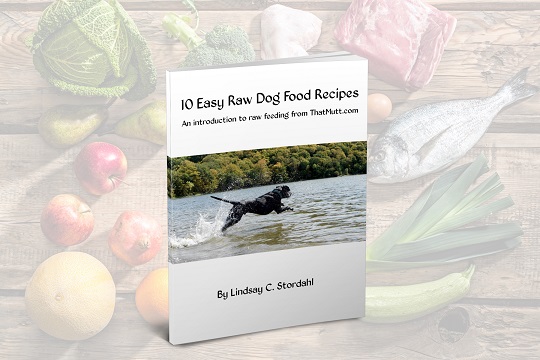
That’s why I wrote an ebook on how to feed raw dog food. So everything is clear and easy to follow, all in once place.
In my ebook, you will learn:
- what raw foods to feed your pups (and how much)
- recipe ideas and where to buy
- how to save money on raw feeding
- what types of raw meat & bones are safe for different dogs
- raw feeding health concerns (we all worry!)
- how to discuss raw feeding with a “traditional” veterinarian
- and much more
The ebook is for those just getting started or those already experienced in feeding raw dog food.
Click the button below to download the ebook.
Or you can email me at Lindsay@ThatMutt.com
-Lindsay
Raw Dog Food Diet for Dogs Pros and Cons
Why should I feed my dog raw food?
Well, if the above reasons weren’t enough …
1. A raw diet is the healthiest diet for most dogs.
A raw diet is the healthiest diet only if it is done properly. Do your research or you could end up with a very sick dog.
A raw diet is the healthiest diet for dogs because it consists of real, raw meat without any preservatives or by-products. Raw food also contains natural enzymes that haven’t been destroyed by the cooking process.
2. A raw could potentially help to prevent cancer and many other health problems.
While a raw diet is not a “cure” for most health problems, it can definitely help improve your dog’s overall health. A raw diet can help prevent obesity, allergies, diabetes, cancer, heart disease and so much more.
Don’t wait until your dog has something terrible like a cancer diagnosis before you switch him to a healthier diet. Switch his diet now in order to potentially prevent future diseases.
3. Dog food companies do not necessarily care about the health of your dog.

Dog food companies want to make money. That’s why most dry dog food is made with cheap ingredients like corn, rice by-products and animal by-products.
You can’t trust a bag of kibble to provide your dog with the nutrition he needs just like you can’t trust a TV dinner to give you the nutrients you need. It’s fine every now and then, but a lifetime of eating this way creates serious problems.
4. When you make homemade raw dog food, you know exactly what she is eating.
If you suspect your dog might be allergic to certain dog food ingredients like grain or corn or certain proteins, making raw food yourself is a good way to eliminate the source of the allergies, according to Dr. Amy Anderson of West Fargo (N.D.) Animal Hospital. Amy just so happened to be my dog’s vet 🙂
5. A natural raw diet makes it easy to add more variety to your dog’s food.
If I ate the same food for every meal, I would start to become deficient in certain vitamins or minerals. However, when I look at my food overall, I am eating the nutrients my body needs throughout each day or week. This is why you want to mix up your dog’s food.
Once your dog adjusts to one raw protein such as chicken, you can start switching it up and feeding him turkey, duck, salmon, beef, lamb, etc. Plus, you can add all kinds of yummy vegetables to the food such as broccoli or carrots.
6. Your dog will look healthier if she eats natural raw dog food.
Owners who feed their dogs a raw diet claim their dogs have shinier coats, healthier skin, more lean muscle and less fat. They have cleaner teeth and gums, and their breath is less smelly. I hear there’s a lot less poop, too. That’s always nice 🙂
7. Raw dog food contains enzymes that are important to the body.
These enzymes are important for digestion and nutrient absorption. When food is heated above 118 degrees Fahrenheit, the enzymes are destroyed, according to Aimee Quemuel in her book “42 Rules to Fight Dog Cancer.” For the same reason, you should include raw fruits, vegetables and nuts in your own diet.
8. You love your dog and you want him to receive the very best care.
The least you could do for him is look into a raw diet and see if it’s something reasonable for you and your dog. No one loves your dog more than you. And no one is looking out for his health better than you. Don’t forget that.
9. Dogs ate raw food for thousands of years.
Eating raw meat is natural for a dog! Dogs have been eating grain-based kibble for only the last 100 years or so. How on earth did they get by without kibble? 🙂
Here is a video of my dog eating raw food:
Reasons not to feed a raw diet to dogs
There are, of course, perfectly acceptable reasons not to feed your dog a raw diet. Here are a few:
1. Feeding a dog a raw organic diet costs more.
Some hard-core raw food enthusiasts will tell you that feeding your dog raw does not cost any more than a high-quality kibble. This might be true if you’re going to buy mass quantities of meat in bulk or if you work out a deal with a local rancher.
But who’s really going to do any of that? Not me. If I feed my dog a raw diet, I just assume I’m going to pay quite a bit more.
During this trial, Ace will be eating pre-prepared raw patties. If I make the food myself, I will be buying meat from the grocery store. Either way, $$$$. Here are some tips on making raw dog food affordable.
2. Feeding a dog a natural raw diet can give the dog an upset stomach.
There are mixed thoughts on this. Sure, raw meat can make a dog sick, but so can cooked food. A new diet is bound to cause a few digestive issues. Some raw dog food companies and vets say it’s better to switch the dog from kibble to raw instantly, with no transition.
The reason for this is because it’s difficult to digest the combo of kibble and raw. Others say to do a gradual switch the way you would with two kibbles. This is the route I am taking. Either way, if my dog experiences an upset stomach, it will pass.
3. Raw dog foods are messy.

Cleaning up after a sick dog is messy, but so is preparing a bunch of raw meat. It’s smelly, and it sits in your fridge to de-frost. The dog’s bowls and eating area will probably also be messier.
And in Ace’s case, there will be more drool, too. You’ll also have to wash your own hands, the dog’s bowls and the area where you prepared the food because of the raw meat and the possibility of bacteria. It’s no different than the precautions you take to prepare your own meat.
4. Feeding a raw dog food diet is time consuming.
If you go with the pre-prepared route like I’m doing, it doesn’t take that much time. You just throw a patty in a dish and let it de-thaw overnight. Then serve. But you will have to wash your dog’s bowls more often. And, if you plan to prepare all the food yourself using your own ingredients, then you’ll spend time planning the meals, shopping for ingredients, storing the ingredients, preparing the food and cleaning up.
5. Storing raw food for your dog takes up more space.
We have a small freezer. Right now my freezer is holding two weeks of raw food for Ace, along with some of my own food. If you have a small dog, storage won’t be as much of an issue. But if you have medium to large dog (or a great dane!) or if you have multiple dogs, you should consider buying a larger freezer for more storage.
6. Some dogs can’t handle all the raw protein.
Old dogs, dogs with kidney issues and dogs with pancreatitis (inflammation of the pancreas) are just a few examples of dogs that should not eat a raw diet, according to Anderson.
Always check with your vet if you are not sure.
7. Your vet might not understand the benefits of a raw diet for dogs.
A good vet will listen to you and openly discuss the pros and cons of a raw diet for your dog. If your dog’s vet does not support a raw diet, find a holistic vet in your area or explain to your current vet why you are interested in a raw diet.
Anderson said she typically does not recommend a raw diet for her clients’ dogs because it is too complicated to maintain longterm. It’s also hard to know whether or not your dog is getting a balanced diet, especially if you are making the food yourself.
8. Your dog will be begging for more ‘human’ food.
This will be a nonissue for most of us since most of our dogs already beg.
Lately I’ve been more likely to mix in healthy table scraps, vegetables or cooked meat with Ace’s food or give it to him as treats.
Now he seems to expect a piece of banana when I make my morning smoothie. He seems to expect a piece of asparagus when I am cooking vegetables, etc. When he gets too annoying with his begging, I make him lie on his bed in the other room. Poor Ace.
9. It’s difficult to feed your dog a healthy raw diet while you travel.
It may not be realistic to feed your dog raw while traveling. I know I plan to feed Ace kibble when we travel or when he stays at a kennel or with a pet sitter. If switching back and forth is too hard on his digestive system, then it may be better to stick to kibble 100 percent of the time. We will see.
Learn more about feeding your dog a raw diet with my ebook “10 Easy Raw Dog Food Recipes.”
Do you feed your dog a raw diet?
What pros or cons would you add to the list?
THE ULTIMATE NEW PUPPY CHECKLIST | WELCOMING A NEW PUP
Thursday 11th of April 2024
[…] If you are considering a raw diet for your puppy, all the more reason to do thorough research. Here’s something to get you started. […]
Feeding Raw Game Meat to Dogs – PAWS Pharma
Monday 4th of March 2024
[…] raw diet means just like it sounds, feeding a dog a diet of raw meat and bones. Learn more about the basics of raw feeding here and check out our raw feeding […]
How To Find Vets That Support Raw Feeding – PAWS Pharma
Tuesday 27th of February 2024
[…] For more information on raw dog food in general, check out our raw dog food resources here. […]
How Do You Feed Raw Dog Food? – PAWS Pharma
Tuesday 20th of February 2024
[…] founder Lindsay follows the same approach and wrote an ebook on how to feed raw dog food, including 10 recipe ideas for small, medium and large […]
How Do You Feed Uncooked Canine Meals? - theplutoscience.com. All rights reserved.
Monday 4th of December 2023
[…] founder Lindsay follows the identical method and wrote an book on how one can feed uncooked pet food, together with 10 recipe concepts for small, medium and huge […]