Raw dog food – Healthy reasons to feed your dog natural raw food

155 comments

Raw dog food recipes ebook and an introduction on how to feed homemade raw dog foodNote: This page has been expanded into an ebook with 10 raw dog food recipes and a guide to raw feeding.

I always wanted to switch my dog to a natural, raw diet. I held back because I needed to do some research on canine nutrition and the pros and cons of a raw diet for dogs. Feeding raw doesn’t have to be complicated, but it’s not as easy as tossing a cup of kibble in a bowl.

To see if a raw diet is right for my dog Ace, I did a lot of research. Next, I decided to feed him a pre-prepared, commercial raw diet for 90 days to see if the diet works for us. He ate raw dog food that came in ground, frozen patties including meat, organs, bones, fruits and veggies. I hope I encourage you to think about switching your dog to a raw diet, or at least a natural, grain-free kibble.

What is a raw diet for dogs?

A raw diet for dogs is simply that – raw. Raw meat, raw organs and raw bones along with raw fruits and raw vegetables if you so choose.

Why is a raw dog food diet healthy for my dog?

Woman who feeds her dog raw dog foodRaw, organic dog food is the healthiest food for my dog because it is fresh, whole and unprocessed.

Dogs can get by on a heavily processed diet (just like their owners get by), but it’s not the healthiest. A wide variety of fresh, unprocessed foods contribute greatly to a dog’s overall health.

Why can’t I cook the meat for my dog?

I can, but why would I?

Raw meat and raw vegetables are healthier for most dogs than cooked food because cooking destroys the enzymes needed for superior digestion and nutrient absorption, according to The Whole Dog Journal, a monthly publication for dog owners. These enzymes survive the freezing/defrosting process just fine.

Remember, dogs ate raw meat for thousands of years before “dog food” was invented.

Why is dry dog food kibble bad for my dog?

I do not have to be a vet or a nutritionist to realize that most commercial dog foods are bad for Ace. Please read the ingredients of your dog’s food and let me know what you find out.

The first two ingredients in a dog’s food should be high-quality proteins, according to Michelle Smith, owner of Natural Pet Center in Fargo, which sells natural dog food and other pet products. These should be specific proteins like duck or chicken. Other ingredients should be high-quality fruits and vegetables. Grain is not necessary, and all corn and by-products should be avoided.

When an animal goes to a slaughterhouse, only about half of that animal is used in human foods, according to Born Free USA, a national animal advocacy organization. These “other parts” (heads, feet, blood, unborn babies, etc.) are considered by-products and are used in pet foods.

“Meat meal,” “poultry meal” and “by-product meal” are also common ingredients in pet foods, according to Born Free. The term “meal” means the ingredients have been rendered. Rendering plants take all the random, leftover body parts and boil them down to a broth. Although the high temperatures kill bacteria and parasites, the natural enzymes and proteins found in raw ingredients are also destroyed.

An animal that died on the farm may not reach the rendering plant for several days, according to Born Free. By this time the carcass is highly contaminated. Although so called “4D” animals (dead, dying, diseased or disabled) are now banned as ingredients in human food, they are legitimate ingredients for pet food. There are also no laws or regulations against using rendered roadkill, horses, dogs or cats in pet foods. To be sure, only buy dog foods with specific proteins in the ingredients such as duck or lamb, not “poultry meal” or “animal by-products.”

Many pet foods also contain brewers rice as the first or second ingredient, which is an inexpensive rice by-product that contains no nutritional value, according to the Association of American Feed Control Officials. The AAFCO sets (unenforced) standards for the quality of livestock feed and pet food.

If you do decide to feed your dog rice (most dogs don’t need grain in their diets), make sure it’s whole grain brown rice.

Commercial dry dog food is also loaded with chemical preservatives, sweeteners and dyes, according to Born Free. None of these ingredients provide any nutritional value to a dog. They are used to improve the taste and appearance of the food. Potentially cancer causing chemicals such as BHA, BHT and ethoxyquin are permitted in pet foods as preservatives.

Why should I feed my dog a raw diet?

Well, if the above reasons weren’t enough …

1. A raw diet is the healthiest diet for most dogs.

A raw diet is the healthiest diet only if it is done properly. Do your research or you could end up with a very sick dog.

A raw diet is the healthiest diet for dogs because it consists of real, raw meat without any preservatives or by-products. Raw food also contains natural enzymes that haven’t been destroyed by the cooking process.

2. A raw could prevent cancer and many other health problems.

A raw diet can help prevent obesity, allergies, diabetes, cancer, heart disease and so much more. Don’t wait until your dog has something terrible like a cancer diagnosis before you switch him to a healthier diet. Switch his diet now in order to prevent future diseases.

3. Dog food companies do not care about the health of your dog.

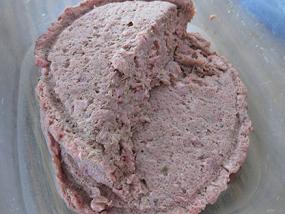
Raw dog rood patties frozen and pre-madeDog food companies want to make money. That’s why most dry dog food is made with cheap ingredients like corn, rice by-products and animal by-products.

You can’t trust a bag of kibble to provide your dog with the nutrition he needs just like you can’t trust a TV dinner to give you the nutrients you need. It’s fine every now and then, but a lifetime of eating this way creates serious problems.

4. When you make homemade raw dog food, you know exactly what she is eating.

If you suspect your dog might be allergic to certain dog food ingredients like grain or corn or certain proteins, making your dog’s food yourself is a good way to eliminate the source of the allergies, according to Dr. Amy Anderson of West Fargo (N.D.) Animal Hospital. Amy just so happens to be Ace’s vet :)

5. A natural raw diet makes it easy to add more variety to your dog’s food.

If I ate the same food for every meal, I would start to become deficient in certain vitamins or minerals. However, when I look at my food overall, I am eating the nutrients my body needs throughout each day or week. This is why you want to mix up your dog’s food.

Once your dog adjusts to one raw protein such as chicken, you can start switching it up and feeding him turkey, duck, salmon, beef, lamb, etc. Plus, you can add all kinds of yummy vegetables to the food such as broccoli or carrots.

6. Your dog will look healthier if she eats natural raw dog food.

Owners who feed their dogs a raw diet claim their dogs have shinier coats, healthier skin, more lean muscle and less fat. They have cleaner teeth and gums, and their breath is less smelly. I hear there’s a lot less poop, too. That’s always nice :)

7. Raw dog food contains enzymes that are important to the body.

These enzymes are important for digestion and nutrient absorption. When food is heated above 118 degrees Fahrenheit, the enzymes are destroyed, according to Aimee Quemuel in her book “42 Rules to Fight Dog Cancer.” For the same reason, you should include raw fruits, vegetables and nuts in your own diet.

8. You love your dog and you want him to receive the very best care.

The least you could do for him is look into a raw diet and see if it’s something reasonable for you and your dog. No one loves your dog more than you. And no one is looking out for his health better than you. Don’t forget that.

9. Dogs ate raw food for thousands of years.

Eating raw meat is natural for a dog! Dogs have been eating grain-based kibble for only the last 100 years or so. How on earth did they get by without kibble? :)

Reasons not to feed a dog a raw diet

There are, of course, perfectly acceptable reasons not to feed your dog a raw diet. Here are a few:

1. Feeding a dog a raw organic diet costs more.

Some hard-core raw food enthusiasts will tell you that feeding your dog raw does not cost any more than a high-quality kibble. This might be true if you’re going to buy mass quantities of meat in bulk or if you work out a deal with a local rancher.

But who’s really going to do any of that? Not me. If I feed my dog a raw diet, I just assume I’m going to pay quite a bit more. During this trial, Ace will be eating pre-prepared raw patties. If I make the food myself, I will be buying meat from the grocery store. Either way, $$$$.

2. Feeding a dog a natural raw diet can give the dog an upset stomach.

There are mixed thoughts on this. A new diet is bound to cause a few digestive issues. Some raw dog food companies and vets say it’s better to switch the dog from kibble to raw instantly, with no transition. The reason for this is because it’s difficult to digest the combo of kibble and raw. Others say to do a gradual switch the way you would with two kibbles. This is the route I am taking. Either way, if my dog experiences an upset stomach, it will pass.

3. Raw dog foods are messy.
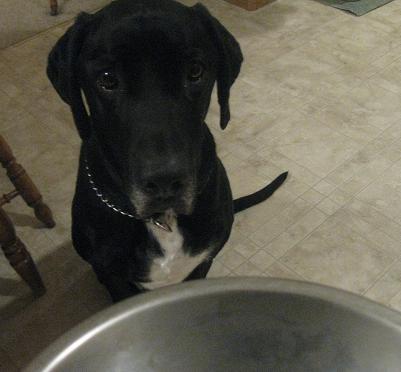
Ace the black lab mix eating raw dog food homemade natural pre-prepared organicCleaning up after a sick dog is messy, but so is preparing a bunch of raw meat. It’s smelly, and it sits in your fridge to de-frost. The dog’s bowls and eating area will probably also be messier. And in Ace’s case, there will be more drool, too. You’ll also have to wash your own hands, the dog’s bowls and the area where you prepared the food because of the raw meat and the possibility of bacteria. It’s no different than the precautions you take to prepare your own meat.

4. Feeding a raw dog food diet is time consuming.

If you go with the pre-prepared route like I’m doing, it doesn’t take that much time. You just throw a patty in a dish and let it de-thaw overnight. Then serve. But you will have to wash your dog’s bowls more often. And, if you plan to prepare all the food yourself using your own ingredients, then you’ll spend time planning the meals, shopping for ingredients, storing the ingredients, preparing the food and cleaning up.

5. Storing raw food for your dog takes up more space.

We have a small freezer. Right now my freezer is holding two weeks of raw food for Ace, along with some of my own food. If you have a small dog, storage won’t be as much of an issue. But if you have medium to large dog (or a great dane!) or if you have multiple dogs, you should consider buying a larger freezer for more storage.

6. Some dogs can’t handle all the raw protein.

Old dogs, dogs with kidney issues and dogs with pancreatitis (inflammation of the pancreas) are just a few examples of dogs that should not eat a raw diet, according to Anderson.

Always check with your vet if you are not sure.

7. Your vet might not understand the benefits of a raw diet for dogs.

A good vet will listen to you and openly discuss the pros and cons of a raw diet for your dog. If your dog’s vet is leery of a raw diet, find a holistic vet in your area or explain to your current vet why you are interested in a raw diet.

Anderson said she typically does not recommend a raw diet for her clients’ dogs because it is too complicated to maintain longterm. It’s also hard to know whether or not your dog is getting a balanced diet, especially if you are making the food yourself.

8. Your dog will be begging for more ‘human’ food.

This will be a nonissue for most of us since most of our dogs already beg.

Lately I’ve been more likely to mix in healthy table scraps, vegetables or cooked meat with Ace’s food or give it to him as treats. Now he seems to expect a piece of banana when I make my morning smoothie. He seems to expect a piece of asparagus when I am cooking vegetables, etc. When he gets too annoying with his begging, I make him lie on his bed in the other room. Poor Ace.

9. It’s difficult to feed your dog a healthy raw diet while you travel.

If you travel a lot, it may not be realistic to feed your dog a raw diet. I know I plan to feed Ace kibble when we travel or when he stays at a kennel or with a pet sitter. If switching back and forth is too hard on his digestive system, then it may be better to stick to kibble 100 percent of the time. We will see.
Please share any additional pros and cons to a raw dog food diet for dogs.

We can always learn more.

Check ThatMutt.com for upcoming blog posts on a raw food diet for dogs.

{ 154 comments… read them below or add one }

Meg March 30, 2012 at 1:40 pm

This is some very cool info on Raw Diets for the dog. I have been feeding my dog a raw diet for about 2 months and he loves it and looks and feels great! I feed him O.C Raw Dog. He loves all 8 proteins it comes in and the patties are very easy to feed!

Reply

Lindsay Stordahl April 15, 2012 at 4:59 pm

Thanks for the info, Meg!

Reply

Anna April 10, 2012 at 2:56 pm

I have just recently changed my lurcher who is 15years old, suffers with a pancreatic problem and who had (ashamed to say) only ever eaten a processed diet all her life…..The results have been amazing!!! I was beginning to think I needed to make a decision about her quality of life because the problem with her pancreas was cropping up more and more but I’m thrilled to say that she is like a puppy again!!!! Ok not quite but even though it made sense and seemed the right thing to do I am astounded by how much better she is. sHe has more energy,brighter eyes, better smelling breath, healthier coat, old dog smell has gone and best of all no pancreatic problems!!! My only regret is I didn’t do it earlier. I use a company who deliver a months supply fresh to the door.
Raw comes highly recommended from me folks!
Great blog:-)

Reply

Lindsay Stordahl April 10, 2012 at 3:48 pm

Oh that is great to hear! What company is it that you are using?

Reply

Jan April 15, 2012 at 3:49 pm

Oh that is great to hear! What company is it that you are using?

Reply

Nanette April 15, 2012 at 7:03 pm

I feed raw food to all 4 of my dogs and my 15 year old cat. I would not recommend mixing raw with kibble because it takes kibble a much longer time to digest then raw food and that can cause some upset. For those of you who feed “premium kibble” please look into where those foods are manufactured. I researched several of them and was surprised that many come out of the same manufacturing plants as very cheap store brands.

Reply

Lindsay Stordahl April 16, 2012 at 2:27 pm

Some people say their pets don’t have a problem with the kibble/raw combo, but I agree with you. I think it depends on each individual pet, however it’s not exactly ideal to mix the two. My dog seemed to do fine when I slowly transitioned him from dry to raw by mixing the two. However, once he was on raw food, if I switched him to a meal of kibble here and there for convenience, he would have tummy issues. He seemed to do better with one or the other or with a period of fasting between the two.

Reply

Amber in Dallas, TX April 18, 2012 at 5:11 pm

I am so happy I found your blog, such great information. I recently decided to switch my German Shepherd to raw food, but I do not know where to start. I found an organic canned food that seems to be better than any “kibble” on the market. It claims to have no fillers, uses high quality protein, no corn products… I believe it is made by a company called Dogswell (dogswell.com) and I bought the Nutrisca and Happy Hips canned varieties. They are about $1.50 per 130z can. I have always fed my dog 2x per day so I fed 1 can per feeding and I also bought large, frozen turkey necks. I thawed 1 each day and she has had 1 turkey neck and 2 cans of this new food for the last 3 days. My dog has been scratching an itch for the last 2 months, her undercoat is completely gone! Benadryl had become her only relief, only bc she was too tired to scratch anymore. I had given her a bath, checked for fleas, ticks, bites, any kind of skin rash…nothing. I took her to the groomer to have her shaved bc I was so tired of sweeping up buckets of hair everyday and thats when I had my “aha moment”, light bulb went off after spending about 30 min w/ the groomer. She only feeds her 5 German Shepherds raw and gave me a few sites to check out for supplements, recommended Coconut oil, a holistic vet online, more info from any groomer I ever met. I need to know how many lbs of raw food to feed my dog each meal, is it like I do for myself and add up the calories in the kibble I was feeding and just use the caloric intake as a base? I love the idea for pre-prepared meals, fast and convenient! Any recipes and suggestions you can give will sure be appreciated. In case you are interested in the sites from my groomer I will list them below:

heidelberg-usa.com Made a supplement called TOTAL Dog Supplement powder- only 1 tsp per day per dog is required and it comes in a 3lb bag for $20!! Will last awhile and has all the things dogs will need on a raw diet.

google this ” Dr. Karen Becker raw diet ” holistic vet with some great videos on youtube

Feel free to email me, I look forward to more posts and your advice! Thanks :~)

Reply

Lindsay Stordahl April 18, 2012 at 5:31 pm

Thanks for the info! I hope your dog is feeling much less itchy!

Reply

Joyce Miller March 9, 2013 at 5:04 pm

Amber in Dallas, I am late checking in, very late checking in, but do you know about DFW_BARF — it’s a Dallas area list but members come from far and wide. Lots of good info on feeding Raw.

Reply

Vivian / Max April 24, 2012 at 4:19 pm

I am so happy I found your blog, such great information and up to date unlikely other webiste. I have a lots of questions need you ladys help.

I just starting to learn the raw food for my dog, he is mix with Akita and Shepherd. He is 13yr and have 2 very large fatty tumors under his front leg.. the vet said its too risk to do the surgery so my friend suggested to do raw food diet. But more I read I got more confused. In his age I really not sure will suitable for him , and as most website stating that Vet. are not recommeted so don’t know who to ask.
It been a week I gave him a mix raw vegetables with ground meat (cooked) He loves it and seems drink less water and kept on sleep.

Questions;
Max, he just have check up and teeth clean done, very things fine beside fatty tumors and arthritis. I meanly want him to loss the fatty or slow it down so how many food I should feed him??
Is any one out there have switch the diet to the senior dog??
Is ogarnit meat and vegi necessary?? what kind vegi I can give? or may be a recipes?
How to prepard to make sure its safey? is there have pre-made so my kid can feed him while I am not around? any recommentation??
How can I start it?? he been out the dry food about a week.

I have so many questions please excuse my ignorance and help me out.
Greatly appreciate..

Vivian
Confused

Reply

James C April 25, 2012 at 3:40 pm

Hi there, I just came across your blog today while I was doing a search on different types of collars for dogs. I’m very happy to hear there is a growing community of dog owners that are feeding their dogs raw. I am having great success with my dog – his coat is nice and shiny, eats ‘less’ (my past dogs seemed to eat so much weight in kibble), and his stools are smaller and most of time have a ‘shape’ to them (instead of soft and mushy).

A few things I’ve learned and come across:
1. Dogs shouldn’t really be fed ‘raw vegetables’ – wolves/coyotes do not have any form of greens in their diet. Also, mixing meat with veggies would confuse a dog’s digestive system. If you think about it, when a wolf catches their prey, they do not bring along a side of broccoli with his rabbit leg. If you do choose to introduce fruits/veggies into their diet, I would recommend berries only (raspberries/blueberries), and do not mix it with their meat. In the summer months, this is when wolves would supplement their diet with berries if they cannot catch any prey, but they wouldn’t typically eat berries if prey is plentiful.

2. If you’re thinking it’s expensive to purchase raw food, you should try to find a local butcher for your food. I believe the raw diet trend is catching on, and two local butchers in my neighborhood are selling meat for dogs. What they typically sell is ground up chicken backs, necks, and wings (bone included). They also sell duck, rabbit, beef hearts, and others – it really depends on the season, but I’m sure when it’s Thanksgiving season, turkey for dogs will be available. I pay about $1 to $2/lbs, and I also buy whole chicken backs and necks. I used to spend about $60 to $80 / month on premium kibble (grain-free, all natural, and all other marketing gimmicks), but right now I feed my dog about a pound of raw/day and it’s about $60 a month. Butchers are a great source of good quality meat, for yourself as well as your dog (the supply chain from farm to butcher shop is much shorter than a grocery store).

3. There are many schools of thought on the meat to bone ratio, but I usually do one day ground meat, the next day bone-in meat (like chicken back/neck combo). In terms of organ meat, one raw dog food supplier recommended 20% of their diet to be organ meat.

4. A couple of websites that I found very informative:
http://www.rawfeddogs.net/ (this is a prey-model site)
http://rawfed.com/myths/preymodel.html (prey vs. BARF diet)
http://www.dogsnaturallymagazine.com/ (great online magazine about naturally rearing techniques).

Great job with your blog! It’s been a pleasure to read.

In reference to your old collar post – I’ve had the best success with Martingales and Prong collars.

Reply

Anonymous August 16, 2012 at 8:41 am

James C, when the wolf eats that rabbit, he’s also eatting the greens (“vegetables”) the rabbit ate. Most prey animals have digested, semi digested and undigested vegetable matter in their digestive systems. So it isn’t really true to say that carnivores don’t eat it.

Reply

Anonymous September 28, 2012 at 5:08 pm

Very true about the vegetables. Dogs just need them to be ground up. It isn’t unhealthy for them to eat raw vegetables, they just won’t get the nutrition from them unless they are slightly steamed or food processed. Raw food is the best!

Reply

Deborah April 28, 2012 at 3:31 am

Hi there,

So I am really new to the raw feeding. There is so much out there and my head hurts.

I have been looking for a list of great raw meaty bones to give my lab mix.

So far we have tried soup bones, beef rib, lamb shanks and chickens necks.

I am really stressed when Nori eats the shanks and rib because she cracks the bones and then eats them. My vet is sorta pro raw but cautioned against lamb shanks after a German Shepard came in and had to have sharp pieces removed from his anus. Ugh. Anyway, what about lambs ribs? Are they as soft as chicken bones?

Nori barely chews the chicken necks but has had no problems.
I am just wonderinf if those tiny sharps pieces from beef ribs ang marrow bones are going to be a problem.

Also which RMBs do you like?

Thanks

Reply

James C May 23, 2012 at 9:14 am

Hi There – any of these websites should help you on where to get started:
rawfeddogs.net/ (this is a prey-model site)
rawfed.com/myths/preymodel.html (prey vs. BARF diet)

A few things to help is to get a kitchen scale to portion out your dog’s meals. The best measurement to use is 2 to 3% of the dog’s adult weight as the daily food portion. For example, a 40lbs dog gets about 1lbs of food a day.

In regards to bones – I have heard that lamb bones aren’t that good, because they are hard. For serving bones, if you want to comfortable about it, I would only serve chicken/duck (any bird) bones to your dog (raw bone, of course!)

And, reach out to your local butcher, many in my neighborhood actually ground up the meat from chicken neck, backs, gizzards and bone into an easy serving ground chicken meal for dogs.

Reply

Lindsay Stordahl May 23, 2012 at 1:49 pm

Thank you, James!

Reply

Kerrie Harrison May 5, 2012 at 12:54 am

My baby had an inflammation of the bowel and was regularly going through the vomiting motion. He lost a ton of weight. I was advised by a friend about the barf diet. No vet I seen seemed to give any advice on this. He was on hills zd but had no interest in eating it and when he did he vomited. I decided to give a barf menu with a mix of a single meat each day – lamb, pork, beef, fish, kangaroo, turkey (as chicken upsets him) and dry food another day. I mix the appropriate 20% ratio to body for week then divide that, with offal, mixed with raw Veggie with slight sweet fruit or veg, that I put through a juicer. Pisco has improved significantly… But my healthy dog is having bowel problems. The kangaroo and pork are too rich for her and her bowels are loose. Should I mix all meats together. Neither of them suffer from bad breath anymore, I’ve increased her consumption of dry food “Artemis” I’ve found to be good… She no longer is snorting from mucous build up but I am concerned about ongoing loose bowels and lethargy. Does changing raw meat daily cause problems? Should I mix them? Pisco is ok with them. I’ve started to slightly cook the kangaroo to ensure no parasites as I thought this might be a problem. Can anyone help me?

Reply

cathy June 10, 2012 at 7:35 pm

Hi Kerri,

I would read as much as you can about feeding raw. I actually when to Bark(petstore) to buy Nature Valleys raw food patties, which are good AND also buy from a local butcher that makes raw patties which are very good, in between I do give her chicken backs, necks and organs here and there but I would not switch up on the meats so quickly. This will cause loose bowels…very loose PU!!!!!!…we had that problem too, I was so excited about feeding her different meats I rushed into it to quickly…

She really loves the raw diet and I feel so much better feeding it to her. When we go away it is so easy just to take the patties and off we go….No preparing and I still feel like it is a lot better then the kibble and canned. I hope this helps.

Reply

Josh May 9, 2012 at 2:51 pm

I can’t stand the smell of dog food! I feel bad when I feed dogs that cheap nasty food… I know that there organic and raw dog food, but people are too cheap sometimes. They keep forgetting that their dog is a part of their family.

Reply

Sandi May 13, 2012 at 8:38 pm

We have fed raw to our golden retriever since day one. She is almost a year old now. Goldens are known for health issues, so we researched for a year to find her. Raw diet consists of bison, beef and chicken. Spinash and asparagus and she loves green beans. She has flax oil as well as salmon oil and raw beef meaty bones. She has a beautiful coat.. very small poops :) in the yard as her body absorbs and uses the meat. She loves apple and bananas are her favorite. I give her organic yogurt on occasion (very tiny tiny amount) with her fruits. Only once a month usually and only a couple of tablespoons.

Reply

George May 25, 2012 at 6:50 am

We home cook for our dogs now, and it started because we have a 17 year old diabetic and a 15 year old with renal failure. We cook the meat and mix it with raw vegetables, and one reason is that the meat we can buy today can be contaminated with ecoli bacteria and other undesirables. We also find it easier to separate the fat, which our older dogs can’t have.
Cost wise, we find it about equal to feeding a top quality canned food.
Our food also contains about 1/3 whole grains, such as barley, brown rice, oatmeal, quinoa, etc. Complex carbohydrates help alleviate the glucose spike after eating, important in a diabetic dog. Don’t forget, a wild dog will eat pretty much the entire animal, including the contents of the stomach and intestines, which is how they fill their need for fiber. If your dog’s stool is too runny, or too hard, then he probably needs more fiber in his diet.

Reply

Karen May 31, 2012 at 8:48 am

When we travel, we take our awesome Edgestar freezer. we use a converter to plug into cig lighter, and it works PERFECLTY!
Just an idea how to take raw food with you.
And when I do travel and make the packs, make it flat, you can fit more.
We drove 7,000 miles to get a brother for my Papillon. NJ to WA…And not 1 issues with the freezer method. Hopefully, you’ll have a lighter hole in the back. All new cars, trucks, SUv’s have it. And it you dont, use an extension cord!

Reply

Jesse June 9, 2012 at 2:31 am

I thought I would comment on your reasons not to feed raw :)

1. Feeding raw costs more: In some places this may be true but some months I don’t spend a single penny on dog food. I have enough to last my two big boys (61 lb smooth collie and a 65 lb and growing bluetick coonhound) for the next two months in my little freezer right now. I am looking for a second freezer but not because I need more room to feed raw successfully. I have had so many opportunities to get cheap meat from hunters and local farmers that I have had to pass them up due to not having the space.

“This might be true if you’re going to buy mass quantities of meat in bulk or if you work out a deal with a local rancher. But who’s really going to do any of that?”

It isn’t as difficult as you would think. Many of us do it. I have received hundreds of pounds of free meat from hunters cleaning out freezers from last year to make room for this year’s meat, farmers who have butchered an animal and don’t have room or a use for certain parts (usually organs), and friends and family cleaning out their freezers.

Many butchers will order bulk meats for you. That is an amazing way to save money. I can buy 50 lbs of beef kidney for $40 from my butcher. Fifty pounds doesn’t take up as much room as it sounds like it would.

It is as simple as placing an order with your butcher and picking it up when it comes in or placing an ad on Craigslist and waiting for responses. We always meet the Craigslist people in person to get a feel for them first. There are many genuine people out there and we have yet to meet a bad egg. And many of them will keep your number and call you the next time they butcher an animal, need to empty their freezer, etc.

2. Upset stomach: It varies from dog to dog. Pups seem to take to it more naturally than older dogs who have been eating kibble for many years. I could see the difference between my 8 week old puppy’s transition and my 7.5 year old dog’s transition. Some dogs just have more sensitive stomachs anyways. My collie would never have made it through a slow transition. He cannot have ANY kibble or his stomach gets upset. My bluetick, however… Well, we call him “Iron Gut”. He can eat anything and not have an upset stomach. I have found that the best way to switch dogs is to do it all at once and to start with boney chicken (backs, quarters, etc) for two weeks then move on to turkey, then pork, then fish, then beef, then wild game. I have not seen many dogs handle the slow switch well but, like you said, there are many different opinions on that matter.

3. It’s messy: There is no need for it to be! You also don’t need to defrost their food. My boys get frozen meals more often than not. It can be a great thing for a gulper. My bluetick gulps his food and feeding frozen provides him with more of a challenge as well as keeping him from eating too fast. We feed outside so there are no bowls involved. We used to feed in bowls but they dragged it out to the grass anyways.

4. Time consuming: Not really. We, quite literally, take their food out of the freezer, weigh it, and toss it outside and let the dog out with it. For me, it takes the same amount of time as it does to pour a bowl of kibble. Where the time comes into play is when you buy in bulk. That was daunting to me at first but now it’s just routine. I don’t mind it in the least. However, I can bring home my bulk orders, toss them into a big, plastic, storage container in the garage, and, once thawed, spend a couple of hours repackaging for freezer storage and only have to do it once every other month. That’s only 6 times a year. A small price to pay for saving a fortune.

5. Storing takes up more space: Well, for me that really doesn’t matter. Not much of these reasons matter because they are not a big enough reason for me to go back to kibble. If I have to buy another freezer (You can find some great used ones on freecycle and craigslist!) in order to feed my dogs a species appropriate diet then so be it. Like I said before, I have about 100 lbs of food in my one freezer. We eat more fresh foods anyways so we never used our freezer much to begin with.

6. Health issues: There are many dogs who have various health issues who have thrived on raw. Obviously, an unhealthy animal wouldn’t survive in the wild but luckily, our dogs have us to care for them. A raw feeding vet would know exactly what dogs can and can’t handle raw. Most can. A lot of health issues can be greatly helped with a raw diet. Too many vets will stick a dog on a Science Diet kibble and call it a day.

7. Vets: It isn’t difficult to find a new vet. I look for a vet who is, at the very least, willing to learn about the raw diet. It is absolutely mind boggling to me to think that a vet could think that dry, processed nuggets are better for a dog than real foods. I am lucky to have a vet right now who feeds raw and has been doing so for 16 years.

It is not difficult to make sure a raw fed dog is getting all of the proper nutrition. We blow canine nutrition out of proportion.

8. Increased begging for “human food”: There is no such thing as “human food”. When we eat food we are eating the same things other animals eat. We have created this idea that dogs eat dog food and humans eat human food. My dogs eat the same meat that I do. I may set theirs aside for them but we eat the same things.

There is no increased begging here. They know when they are being fed and they know when we are preparing our own meals. My collie begs no more now than he did when he was on kibble.

9. Traveling: Not if you prepare for it. A cooler and some ice are all that’s needed. I don’t know how you travel but even when my dog was on kibble we would stop and let him eat on solid ground. It is no different now that he is on raw. Bring some disposable gloves if you don’t want to touch it or some sanitary wipes. Frozen food will stay frozen in a cooler much longer than you would think. SOme people even go with dehydrated meats when they travel. If I wanted to I could dehydrate my own or go buy dehydrated lamb lung, duck necks, etc from out all natural pet store.

I am also interested in whether you are researching BARF (Bones And Raw Foods) vs PMR (Prey Model Raw). I feed PMR as I believe dogs are carnivores. Dogs cannot digest plant materials unless we have cooked and processed it for them and, I believe that, if it has to be cooked then they don’t need it. On PMR a dog is fed a ratio of 80/10/10. The first 80% is muscle meat (muscle, heart, lung, tongue, etc), 10% bone (raw, of course), and 10% organ (5% being liver and 5% being another organ like pancreas, kidney, etc).

We include oily fish like salmon, mackerel, sardines, anchovies, etc. for omega-3s. Grass fed meats can supply that instead but fish is easier for us to find for an affordable price. There really isn’t much more to it than that. We avoid weight bearing bones from large ungulates like cattle, elk, moose, bison, etc because they are dense enough to crack teeth. We feed 2-3% of their projected adult body weight but all dogs are different so adjust accordingly. It really is simple.

For anyone interested check out the preymodelraw.com website. It has helped MANY people transition to raw without the worry of feeding the BARF diet. It is definitely something to consider looking into when you are thinking about feeding fruits and veggies to your pet carnivores :)

It is the guide I used to transition both of my guys.

Sorry for the rambling. It was just such a pleasant surprise to see a blog about raw food and someone considering it rather than speaking out against it from fear and ignorance as I see so many do.

Reply

Lindsay Stordahl June 10, 2012 at 3:39 pm

I’m glad you shared your opinions on it, since you have been feeding raw.

Reply

katie July 19, 2012 at 10:15 pm

I really appreciated reading what you wrote in addition to what was wrote already on this blog. I have been researching dog foods and since I sell Golden Retriever pups I want a dog food to recommend my new puppy owners. I’m going to add a page to my website about a raw diet for dogs! Thank you so much for the information!!!!

Reply

Mark June 13, 2012 at 1:05 pm

“…Old dogs, dogs with kidney issues and dogs with pancreatitis (inflammation of the pancreas) are just a few examples of dogs that should not eat a raw diet, according to Anderson…”

Is this due to the myth of high protein being bad for dogs with kidney issues? http://files.championpetfoods.com/Myths_of_High_Protein.pdf would be an interesting read, complete with scientific references to back up their comments which contradict this idea. Quality protein diets are better than high carbohydrate diets for kidney problems. Many senior dogs have been moved to a raw diet and found a new lease of life.

Will say if interested in raw, research it first. Be additionally careful if you have a dalmation with a low purine requirement to prevent uric stones whatever. It’s possible to feed raw but a lot more complicated.

Reply

Paul July 6, 2012 at 2:09 am

Our greyhounds have been on raw diet which usually includes ground beef or turkey, and vegetables.
Our 6 yr old is sick and we don’t know the cause yet but urinalysis and blood test show abnormal levels of protein and it appears the kidneys are leaking protein.
We are advised to reduce the amount of protein in the diet
Beef and turkey are high in protein. We are not crazy about a high carb diet and low protein but looking for ideas on what should be given to our greyhound.

Paul.

Reply

George July 6, 2012 at 4:48 am

Point one: dogs have been with us for over 50,000 years, and over that time have evolved to eat pretty much what we eat, with few exceptions.
Point two: most of our dogs are overfed, underworked, and don’t require a high calorie and protein diet to do well.
Point three: our 17 year old diabetic JRT, 15 year old kidney failure JRT, and our 2 and 5 year olds do very well on a diet of 1/3 whole grains, 1/3 raw vegetables, and 1/3 cooked, lean meat.
This is a balanced, high fiber, low protein, low calorie diet. The whole grains soften the glucose spike after eating for the diabetic, the low protein is good for the 15 year old kidney failure, and everybody gets their balanced nutrition. Nobody is overweight, and my “hard keepers” are maintaining weight. They are never constipated, nor have diahroea. Coats are shiny and soft, energy is great.
The only problem is that their toenails grow like crazy, and I have to cut them once a week!

Reply

Heather July 31, 2012 at 12:56 pm

Awesome info. I recently (for the past 2 weeks) have been feeding a partially raw diet to 8 of my 9 dogs & they love it. While I haven’t started them on raw meaty bones yet they love the fresh ground beef trimmings that I get from a butcher shop. I mix it with whole raw eggs, flax seed or wheat germ, cooked whole grain brown rice, fresh zucchini & sweet potato, unsulfered molasses & sometimes a can of mackerel fish.

Reply

Eddie Floyd July 31, 2012 at 1:14 pm

My pet store, Bark n Purr Pet Center, in Austin, TX has been selling commercially prepared raw pet food for about 10 years. We have never found a case where feeding raw to dogs is a negative. Their stomach is so acidic that it will not harm them as it might a human. If they throw up initially it is because their stomach acid has adjusted to a higher pH to handle the carbohydrates. Fast them for one day to let their stomach acidity return to normal. We have had one Pomeranian rid itself of Black Skin (a supposedly incurable disease). The same dog stop having seizures in 2 weeks after changing to a raw diet. Raw food is even more important for cats. Cats are obligate carnivores. We have found one brand that most cats will eat, Radcat.

Reply

Auma August 16, 2012 at 9:16 am

I have a little nine year old fellow who is half Border Collie, half Chihuahua (don’t think about it!), and who also has three legs. He lived most of his life as a street dog, so heaven knows what kinds of cuisine that involved!

My son started feeding his dogs raw food because one had an extensive, mange-like (but not contagious) skin disease, which promptly cleared up completely. His raw diet of choice was frozen, whole rabbits. And I mean whole: hunt, shoot, freeze. While I came to admire this in principle, it just was not about to happen in my house (all those little eyes). So I ordered Darwin’s raw food for dogs. It’s excellent, and the company’s very, very helpful with phone consultations.

The first dinner I introduced him to the raw food, I mixed it half-and-half with kibble. He wolfed it down as if he hadn’t eaten for a week. So the next day, dinner was all raw food. After two months, his coat really truly is shinier, his weight is perfect (lost almost two unnecessary pounds), and he exudes wellbeing and energy. I would never have believed it if I hadn’t seen it.

I’m in the process of developing my own recipe So far, I’ve got a mixture of ground beef or turkey, pureed chicken liver, and yams, carrots and peas “chopped” in the blender. This is lacking in bone and cartilage and a few other items and innards I want to include, but even so, it all seems a billion times better than that awful kibble.

Reply

Kiah August 21, 2012 at 11:53 pm

I have a rescue dog who has suffered from very bad Dermodetic mange his whole life. (took him from his mother at age 3 weeks along with 3 other puppies becasue they were all dying and mum couldnt look after them) he has suffered from it since especially when his immune system is low like when he goes through growth spurts or gets a bit sick. I started off feeding him on can food, until my vet who is a very holistic lady and valued friend put him on various different herbs and essences to help boost his immune system and recommended I change him to a raw meat diet. I started off bying chuck/round steak from the shop and that was super expencive so I got in touch with my local cattle station who gladly packaged up 10-20kg bags of minced off-cuts and delivered them to my door. I mix it with pasta and vegies and also a bit of kibble for a bit of crunch and my dog loves it. it has also worked out to be cheeper then can dog food. He also gets chicken necks and chicken wings and all my left overs, needless to say he is once spoiled pooch that probabaly eats better then what I even do… unfortuantly though his skin can only be maintained and he does still go through the occasional period of skin issues! (luckily at the moment we are in a very good place and fingers crossed he hasnt had an episode in months) when he is not having skin issues (and he actually has fur to comment on) I ALWAYS get comments on how great his coat looks and how healthy and happy his is. his story breaks my heart but I am just so grateful he is in my life, he is my best friend and my family and I would do anything for him!!!

Reply

Charlene September 8, 2012 at 6:18 pm

I started my 9 year old Pug on Stella and Chewy 2 weeks ago tomorrow. She had a few rough days transitioning but today is doing great. She loves it.
Rosie is a Science Diet allergy recipient. She started with vomiting around 3 years of age and graduated to full blown skin problems by the time she was 7. Of course we did all we could to stop the vomiting, which was put her on Science Diet d/d… grrrrr. She did get some better with the digestion issues as long as we stayed away from grains, but never completely, and while we were struggling to keep her well, we were doing more damage to her with potatoes. Finally, this past January, I said enough. After finding a legit vet. written cook book, i started cooking for her. She started improving greatly, but living in an area where good vitamin resources are limited, after several months I noticed she was starting to lean when walking and having a hard time getting up. So I found out about Stella and Chewy and the rest, I hope, is history. What I like about S&C is they do not mix proteins, do not use grains, nor potatoes. She is already getting her energy back with a full raw/ vitamin enhanced diet. After all I just said, my biggest point is this. Feeding Stella and Chewy, homecooking or RAW is cheaper than feeding prescription dog food and the vet visits that go along with it.

Reply

Lindsay Stordahl September 16, 2012 at 11:49 am

So glad to hear your dog is doing well on this diet!

Reply

Judy September 20, 2012 at 10:31 am

When traveling, you could carry along the Freeze-Dried RAW dog meals. It comes in a bag and is in the form of patties to which you add water. Stella and Chewy’s makes freeze-dried raw and so does Paw Naturaw (organic also) and there are probably other brands as well. When I’m going to be away, I buy some of this for my husband to feed to our dog since he does not want to deal with the raw.

Reply

Lindsay Stordahl September 21, 2012 at 11:38 am

Yes, the freeze-dried food works well. It is expensive, though.

Reply

Matt Hoss September 28, 2012 at 10:20 am

do you need raw pet food? I own and operate a chicken processing plant in central Wisconsin we are a state inspected facility and have been in operation since 2000. we are only open form May-November. for the past few years i have been selling the neck of the birds for pet food but it never really took off! so i purchased a grinder to make a paste with the Necks, Hearts, Livers, and Gizzards. I can do any combo of the 4.

cell# 715-572-1477

Reply

Suzanne October 2, 2012 at 9:56 am

i make my dogs raw food with lean ground beef mixed with cooked brown rice and peas and carrots – do you think the rice is superfluous? i also feed them raw chicken backs and necks with the fat cut off and for treats frozen marrow bones!

Reply

Lindsay Stordahl October 2, 2012 at 10:04 pm

I am not a vet or any type of nutritionist, but I don’t believe dogs need any grains in their diets.

Reply

Judy October 3, 2012 at 8:48 am

Lindsay, you are correct. Not only do dogs not need grains, they also have a hard time digesting them. Dogs’ digestive tracts are short, not designed for digesting grains. Humans’ long digestive tracts can easily digest grains. Cows have even more complex digestive systems so that they can digest grass. It makes sense to feed what the body is designed to handle. That’s why it’s also a helpful step to cook or at least blend the veggies you feed to your dog. Raw carrots are a fun treat, but pup doesn’t digest most of the carrot. You will see orange :-)

Reply

Suzanne October 3, 2012 at 9:05 am

Hi Judy and Lindsay :)

Good stuff – thank you for clearing that up….

the most amazing thing that I have noticed that while on the raw food is that the quantity of poo has been reduced by 70% and there is hardly any smell.

Reply

Pam December 28, 2012 at 10:32 am

I switched my Samoyed/Sheltie mix at 9-1/2 yrs of age to raw. She’ll be 14 this January and is is GREAT shape for her age according to her vet. My miniature schnauzer started eating raw a 8 weeks old and is now 3 and doing great on it…should be a poster child for feeding raw. Basically my girls eat raw chicken thighs with omega 3 capsules when I don’t feed fish and organ meat. When I can get other proteins at a good cost they get it…but they normally eat chicken. They love it. I feed grain free kibble only when raw isn’t possible and they both do ok on it but prefer their raw. Oh…they get a raw egg once or twice/week as well. Raw carrots are a favorite treat. Veggies make great treats.

Reply

Danielle January 2, 2013 at 6:22 am

Hi Lindsay,
I’m excited to have found your blog/website. I have decided I’d love to start a dog-walking/play business and think you’re experience and expertise sounds so helpful! I have an issue though: I just purchased your ebook…the problem is, I was having an issue logging in to my paypal. I wasn’t able to reset my password, so I went and used an old email address. THe payment came out of my account, but I’m afraid I won’t receive the book in the right email address. I can’t get into the old email account–it’s hotmail, which I guess has changed to microsoft, anyhow, I can’t get it! Could you please let me know how I can contact you with the email address that I’d like the book to be sent to? (It’s the email address I’ve entered here for your blog…the gmail one)
Thank you!

Reply

Lindsay Stordahl January 2, 2013 at 7:43 am

Just let me know what email address to send it to. I will try sending it manually to your gmail address. Just let me know if you don’t receive it.

Reply

Lindsay January 2, 2013 at 6:06 pm

I sent it last night to your gmail address.

Reply

Theresa January 3, 2013 at 11:48 am

Hi. I have a ten year old lab who has arthritis and is in pain at times. We are in the Philippines and at times it is hard to find medicines for pets. Would you recommend raw diet to my chelsea? She is quite obese. Shes around 40 kilos. I feed her pedigree dog food. Also the choices of food are very very minimal in our area. How can i lessen her pain? I really need help. I ahve two other dogs one is mix poodle-shitzu and the other is a one year old boxer. What is the ideal amount or weight of raw food to give my three dogs and how often should i feed? Right now they get a bowl of pedigree twice a day. Please help me. I am in pain when i see my dog in pain.

Reply

Lindsay Stordahl January 10, 2013 at 8:20 pm

My older foster girl Dora was on Dasuquin for pain in her joints, and that seemed to help. You could switch to a raw diet for her overall health if you are comfortable with the idea.

Reply

Laurie January 16, 2013 at 1:41 pm

Hi, I’ve been feeding my 2.5 year old border collie mix prey model raw for about four months now. She gets half a chicken carcass every morning, and dinner alternates between turkey neck, pork bones, and a homemade lamb/liver/supplement concoction. Two days ago she didn’t eat her turkey neck, but then ate her chicken in the morning. Last night she didn’t eat her pork bone, and this morning wouldn’t eat her chicken. I have an emergency bag of Instinct Raw in the freezer for my cat, and she ate that. She seems fine otherwise, normal poop, active, doesn’t seem to have sore mouth/teeth (tugging at leash playing keepaway). Should I be concerned? Any ideas what the problem might be?

Reply

Lindsay Stordahl January 16, 2013 at 4:44 pm

I’m guessing she is just not hungry, and she eats when she is hungry. If all else seems OK, then it’s probably just that. Of course, if you are worried you should talk to her vet.

Reply

Lindy Wells January 24, 2013 at 9:15 pm

One of my 3 shitzus was diagnosed with anal carconma cancer last March. Wasn’t supposed to live past May but it is The end of January and he is still here with a tumor but no pain yet, walked 45 minutes a day and has been on a cooked diet since he was diagnosed. Last week he stopped eating for 3days. I panicked but was considering having to let him go. I was getting ready to cook 2 riveted hoping and praying he would take a bite because I had tried every kind of cooked meat and vegetable there was but I had read that you could feed your dog raw meat so I offered him some raw steak. Oh my gosh. He ate it and I went to the store and got him some beef ribs and serloin and he has been eating it ever since. Then he ate apple slices, raw carrots and some bran cereal. Hey he doesn’ t have long but his energy and bright eyes are back and if I can give him comfort that’s what I am here for. So I started my youngest 6 yr old girl on it two days ago. Raw steak and stir fry vegs chopped up. She loves it and so far is doing well. My 16 yr old blind, deaf, boy still wants his roasted chicken, brown rice, raw vegs.

Reply

Lindsay Stordahl January 25, 2013 at 4:46 pm

Sorry to hear one of your dogs is sick, but I’m glad they are all benefiting from a raw diet. Thanks for sharing your experience, and I hope your dog has many good days ahead. Sending you my positive thoughts.

Reply

reagan February 1, 2013 at 1:34 pm

If you are worried about the inconvience of raw taking up your freezer space or when you travel or board your dog. You can use stella and chewys freeze dried raw dog food. All the convience of kibble with all the belnifits of raw. You just add some water to it and its rehydrated again. Its pretty awesome! and totally balanced for you so you dont have to worry

Reply

Lindsay Stordahl February 2, 2013 at 2:51 pm

Yes, good advice!

Reply

Author Grams March 13, 2013 at 9:23 pm

Hi, I have a 5 year old Shitzu, who suffers from itching and bites her paws and her arm pits till they bleed, she also just got stones, I am so fed up with vets as they put her on a prescription diet s/d and she refuses to eat it, so I’m not able to give her meds. I am strongly considering putting her on this raw meat diet that everyone is talking about, she has no problem eating raw meat. My nephews vet suggested it for his German Shepard and the clean up( his poop) has no smell and it can be sprayed with a hose and disappears into the grass, NO MESS! Wonderful My question is how much raw meat, ounces would I feed a 17 lb shitzu….?Please help my Pebbles needs help!

Reply

Lindsay Stordahl March 14, 2013 at 9:14 am

Check out these two posts, Author. Most raw feeding sites will recommend about 2 percent of the dog’s ideal body weight. Honestly, I don’t measure my dog’s food. I just feed him a bit more if he seems hunger or thin and a bit less if he looks heavy.

Here are some raw dog food recipes: http://www.thatmutt.com/2013/02/16/what-ive-learned-about-homemade-raw-dog-food-diets/

Some info on how to feed raw dog food: http://www.thatmutt.com/2011/03/18/how-do-i-feed-my-dog-a-raw-diet/

Reply

Kathleen March 21, 2013 at 3:42 pm

Stella’s makes a freeze dried raw diet that you can buy for when you travel. It’s just as good as the frozen raw. It’s just made for those pets who are on a raw diet but also travelers. Our two 8 month old Papillons don’t seem to notice a difference or they just don’t care. They tolerate both equally well.

Reply

Laura March 27, 2013 at 10:08 am

I have fed PRIMAL raw food to my border terrier since no other food (dry or canned) would alleviate his CECS (also known as Spikes disease or formally as canine epileptic cramping syndrome) which has plagued him since about 6 months of age. What I have found is that his particular cecs is aggravated by PROCESSED proteins….like proteins cooked so much as to turn them into kibble or to safely can the food, or to make treats like chicken, pig ears ( which I never fed anyway) jerky treats, etc. Basically he eats all raw including fruits and veggies and his Primal patties. He gets treats of apple or banana and on occasion a bit of string cheese or pure yogurt (fage, as no additives, flavors, corn syrup etc.) He did well with this for 4 years with only one brief seizure. Recently having some construction work and he got ahold of something from them, and has had a horrible prolonged episode of 5 days on and off, seems to be coming out of it….why do people seem to think they can give your dog a treat when you tell them not to?
Anyway RAW FOOD saved this dog. I am a true believer. He is 9 and recent blood, liver work shows he is in perfect condition!!!!!!
Another thing you might think about is vaccinations. My dog is done with these. Most dogs by later ages are fully protected. Because of the processing of vaccines, he has has seizures as a result of these too, now I do the more expensive titer blood tests, to show his immunity is acceptable to licensing agency.

Reply

Lindsay Stordahl March 27, 2013 at 10:34 am

So glad your dog is doing well. I hear you on the vaccinations.

Reply

Suzie Jackson May 30, 2013 at 4:18 am

My dog is about 8 or 9 (she’s a rescue–Mini Schnauzer), diabetic, about 20 lbs.
There are no diabetic formulas for dogs that aren’t pure GMO based. There’re a lot of corn (Science Diet WD) and other junk, so I decided to home feed her. Our vet’s testing methods are off and we don’t always know where she stands on insulin amounts. Here’s what I feed her: Organic chicken, cooked, organic unsweetened yogurt, flax seeds, vinegar (3 drops), organic black beans, organic raw carrots (she probably eats about 10-15 a day as treats), organic green beans, organic extra virgin olive oil and if I’m out of chicken, I replace it with sardines that are in heavy oil and salted. I give her about 4 of those x 2. And I give her 1000 units of fish oil-1x. She gets 5cc of insulin–the horrible recombinant stuff. Am I doing the right thing for her? She was overweight–up to 26 lbs. and now she weighs less. Do you think this is a balanced diet? I can’t get answers or interest in her diet from the vet. She said no fruit. I give her a couple of drops of honey on top of her yogurt if she looks wobbly. She eats at 6am and 6pm with green bean and carrot treats and then yogurt treats at my lunch time. She was strangely wobbly and weird and restless tonight and I’m worried, because she also eats a lot of seasonal bugs and maybe frogs. Thank you!

Reply

Lindsay Stordahl May 30, 2013 at 9:47 am

One thing to include in the diet is calcium and organ meat. You can probably get some chicken liver or turkey parts at your grocery store, or you can ask a local butcher for some beef organ meat. I also recommend feeding raw chicken bones such as chicken thighs or chicken quarters. If this makes you nervous, try giving some ground egg shells or a calcium supplement.

These are just my suggestions. Since your dog is a diabetic, I think it would be best to consult a holistic veterinarian. Another option could be pre-prepared commercial raw food. It’s pricey, but you could feed it once or twice a week.

Reply

Paul June 8, 2013 at 1:57 pm

This blog is complete garbage. You state that a raw food diet PREVENTS CANCER. In fact it was #2 in the reasons why you should switch. BULLOCKS.

If you have the cure for cancer (ie you can stop all Osteosarcoma’s from ever happening in any dog) then why are you not rich and famous with your portrait in every vet’s office?

And why does just about EVERY raw food diet has to add some non-raw-food supplement because (wait for it) the raw food does not provide all the nutrients a dog needs?

Lasty most of your cites/quotes are garbage. You talked to a pet food store owner and she said it was OK? Really? How many years of medical school do you go to before you can open a pet food store? Call us Michelle Smith and have her list her credentials. Oh, and I’m sure the ADVOCACY group ‘Born Free’ is also a learned group and not just a lot of dog owners who want to save all the cure puppies.

The author of this useless blog should be banned from the Internet.

Reply

Lindsay Stordahl June 9, 2013 at 9:52 am

Sorry to read such a hateful comment from you, Paul. I see that you love dogs, and I know you will do what you feel is best for yours.

Reply

Leave a Comment