
What I’ve learned about homemade raw dog food
I’ve been feeding my dog Ace homemade raw dog food, and I plan to continue.
I want to share some thoughts on the experience for anyone interested in switching her dog to raw.

I am not a vet or a nutritionist. This is just some advice from one dog lover to another.
Dog owners are hesitant to switch to raw feeding because they worry they’ll do it wrong. I was the same way.
Research is a good thing. But don’t use “more research” as an excuse to wait months or years to make the switch. Just start a week or two from now. If raw food isn’t right for your dog, you can always switch back to feeding dry food.
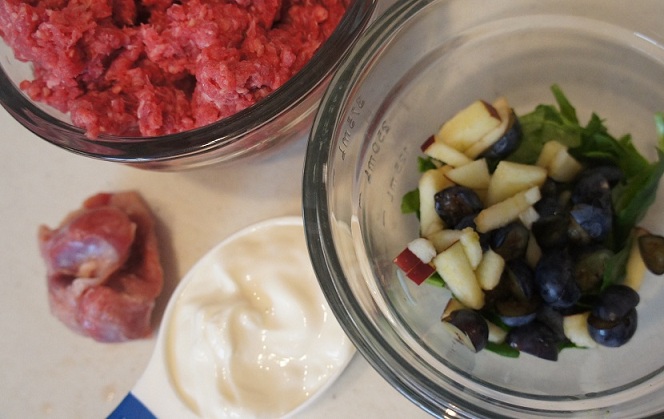
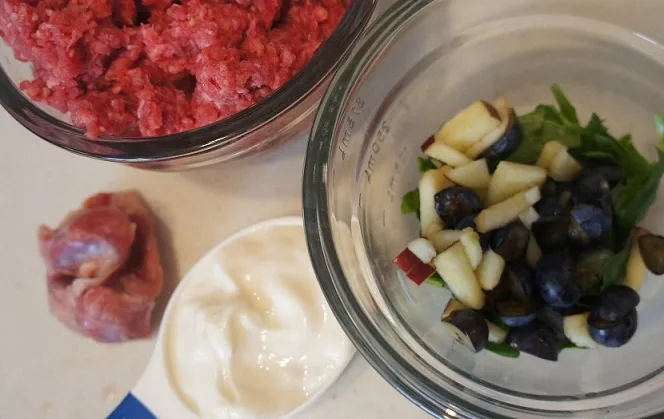
My thoughts on homemade raw feeding
Use commercial raw food to get started.
Commercial raw dog food is expensive ($3.50 per pound or more), but it’s a convenient way to become comfortable with raw feeding. The bones are typically ground so you don’t have to worry about your dog choking. The food should also meet the nutritional standards of the Association of American Feed Control Officials.
Try feeding commercial raw food for a week or two before you make your own raw dog food recipes.
Avoid feeding foods that make you nervous.
If you’re nervous about potential bacteria, then lightly cook the meat for now (but don’t feed your dog cooked bones). If you’re worried your dog will choke on raw bones, then don’t feed any bones for now.
Start by feeding what you’re comfortable with, and transition to a wider variety over time.
I’m a worrier myself. But, my dog has never gotten sick from raw meat, and he’s never choked on a raw bones.
Add new foods slowly.
I started Ace on raw chicken, and this week I added raw beef. He’s never had digestive issues with raw food, but I still wanted to give his system time to adjust before adding new protein sources. You know your dog best, but when in doubt wait a few weeks before adding new types of meat.
Shop as you go.
Raw feeders like to stock up on meat when it’s on sale. That’s great once you know what your dog likes. You can also save money on raw dog food that way.
I realized, though, that I don’t like to buy huge quantities of food. When I shop for myself, I buy about a week’s worth. When I’m out of food, I head back to the store. That’s how I’ve been shopping for my dog, too. When I’m at the store, I buy about a week’s worth for him. It’s less overwhelming.
Whole chickens are way too much work to portion.
Some raw feeders choose to buy whole chickens and either feed them whole or cut them. There’s nothing wrong with that, but it’s not for me.
I will never buy and cut up a whole chicken again. I don’t have the proper boning knives, and I’d rather not spend the time. It’s easier to buy packages of chicken quarters. These are the perfect portions for my 70-pound dog.
Don’t freak out about an upset stomach.
Some dogs will get loose poop from switching to homemade raw dog food. This is normal, and it’s usually because of the higher protein or fat content compared to dry dog food. Usually, a little extra bone in the food will fix this problem. Canned pumpkin also works wonders (sugar free).
Some dogs will throw up a yellow stomach acid in anticipation of a meal. That’s just a sign that your dog’s stomach is preparing to digest the meat. No big deal.
Also, you might see your dog throw up his meat right after he eats or while he’s eating. This is most likely because he swallowed large chunks, and his digestive system recognizes they will be difficult to digest. So, the dog throws up, re-crunches the food a bit and re-swallows. Nice, right?
Of course, if you are worried about your dog, you should take him to the vet.
Don’t worry about “balance.”
I know my dog requires about 1.3 pounds of food per day to maintain his weight, but I don’t measure his food. Instead, I observe his behavior and weight. Does he seem hungry? Does he look thin? I adjust accordingly. Every meal does not have to be the same size.
As far as nutrition, my goal is variety and balance over time. Everyone has their own opinion on what a dog needs, and every dog is different.
Ace eats about 70 percent raw meat with bones (mostly chicken), 20 percent fruits and veggies and 10 percent organ meat. He also gets a glucosamine tablet every day, fish oil and either an egg, plain yogurt or cottage cheese. Sometimes he gets a calcium tablet or probiotics. With time, I plan to introduce a wider variety of protein sources.
Ace eats dry dog food at least twice a week. I want him to remain used to it for convenience and traveling. I also plan to feed commercial raw food once or twice per week.
Is this ideal? I’m doing my best. For more info, see my post on how to make raw dog food.
Approach your dog’s vet the correct way.
There is no “right” way to talk to your dog’s vet, of course. Every vet is different.
When I asked Ace’s vet about her thoughts on a raw food diet for dogs, she was quick to speak against it. Dogs can choke on bones or get sick from raw meat, she said.
But when I told her I am feeding my dog raw food, she was willing to work with me.
I recommend you approach your dog’s vet by saying, “I am feeding my dog a raw diet. Could I show you his feeding plan and get your ideas?” If the vet is unwilling to work with you, then find a different vet.
It’s challenging for vets to deal with a wide variety of dogs owners. They know most people won’t take the time to feed a proper raw diet. Still, I have to mock them for recommending corn-based foods like Science Diet.
No one should feel bad about the type of dog food they buy. My dog ate Purina One for years. But vets should at least tell people about healthier, meat-based dog food brands.
Does anyone really benefit from a diet of mostly corn? Maybe grasshoppers? 🙂
 What have you learned about feeding your dog raw food?
For more info on raw feeding, my ebook provides a raw feeding guide and 10 easy raw dog food recipes. Check it out here.
B J Audet
Saturday 27th of August 2016
I have 3 large dogs: GSD (100 lbs.), Aussie (65 lbs.), and an English Lab (75 lbs.) I have fed all three dogs for the majority of their lives. I switched to high-end kibble for about 6 months and my Aussie developed an itchy skin condition, so I returned to raw. We feed mainly raw chicken, a good quality canine multivitamin, fish oil, chicken here & there, and fresh raw eggs. The skin problem cleared up right away. Their poops are tiny!!! The Aussie is now 15 years old and acts like a puppy, though he is getting a little hard of hearing. I know that is part genetics, part diet, but I have good reason to believe it's mainly diet.
karen
Monday 27th of June 2016
how many meals per day for my dog?how many raw food?
karen
Monday 27th of June 2016
how much raw meat must be feed to my dog/?once a day?
Mel
Monday 4th of April 2016
I never even heard of the raw food diet until I read your article about the 6 things you can you for your puppy. I was immediately intrigued and got almost obsessive with research. 1.5 weeks later, my pup has had his first (2nd and 3rd) commercial raw food meals and he LOVES it. No upset stomach (yet) and his breath already smells better. Since he's a small breed and requires less food, I don't know if I'll ever transition to homemade foods, but I am excited. Also, I'm a new subscriber (2 weeks) and I already look forward to seeing your newsletters in my inbox.
Lindsay Stordahl
Monday 4th of April 2016
Oh that's wonderful! I'm so glad the transition to raw went well. Sometimes they get upset tummies because of the combo of dry food with raw food so that's great that your dog seems to be handling the switch just fine.
karie
Tuesday 29th of March 2016
how long can you keep egg shells cooked and raw in the fridge before baking them to grind up ?
Lindsay Stordahl
Tuesday 29th of March 2016
Hi Karie. I'm not really sure. I would think a good two weeks since you'll be baking them anyway to kill any bacteria.